Serious times call for serious leaders
March 26, 2026
In a time of global instability and mounting crises, Australia is being led by an unserious leadership class across politics, business and beyond.
Our times are serious. However, at leadership levels across Australia – in politics, business, the media, entertainment, sport, in the legal and medical professions, and in academe – the country is being led by unserious people.
The seriousness of our times cannot be overstated. The fragile arrangements of the post-War world order have fallen apart and there are no king’s men (whether in the White House or anywhere else) who can put it together again. The hands of the Doomsday Clock are closer to midnight than at any time. Wars affecting the entire globe are being fought in Gaza and the West Bank, in Ukraine, Africa, and in the Middle East.
Increasing numbers of deprived people everywhere are reacting angrily, violently, irrationally, to their absolute (not relative) deprivations which include unjustly restricted access to meaningful work, exclusion from proper education and training programs, a serious lack of decent housing, inaccessible medical and mental health services, as well as not being given due recognition of their legal rights and dignity as human persons. They have no other choice than to be angry. No one at the top is listening to them.
Breakdowns in essential infrastructure across overcrowded cities are synchronous with increases in crime, social disharmony and conflict. Public and private spaces in our cities have become jungles of graffiti which few know how to read. Meanwhile the ravages of climate change are increasing everywhere – floods, fires, droughts, environmental devastation, dying rivers, encroaching deserts, polluted air, fouled seas.
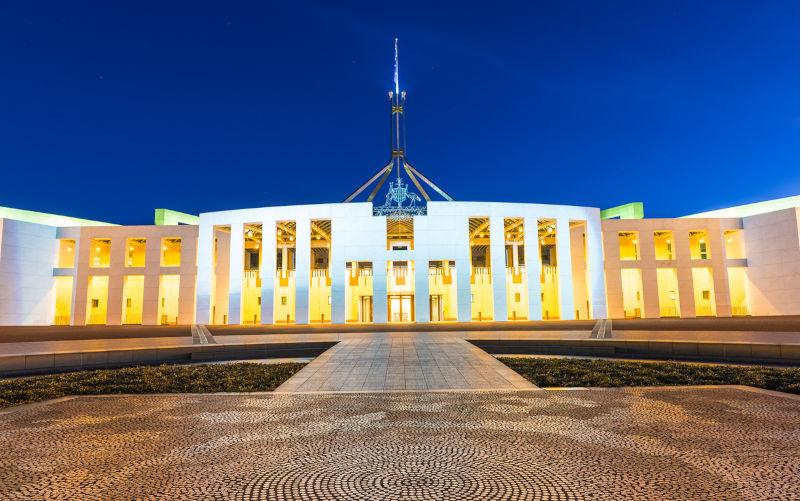
Where does this leave Australia? The devastating fact is that the parliament in Canberra is overwhelmingly populated by unserious people. It’s difficult to identify anyone in the parliament who could be labelled an intellectual, let alone a statesperson.
In the Albanese government Richard Marles is a standout example of unseriousness. He is the leading spokesperson for the US alliance, while acting as principal advocate for the notorious AUKUS deal. There is nothing in his meandering media interviews or contributions in the House of Representatives indicating that he understands the seriousness of our times.
Where does he stand of nuclear non-proliferation? What are his policy views on responding to climate change? What exactly are his thoughts about the Trump administration, especially his counterpart Pete Hegseth? How does he square the fact that the increased US military presence in Australia is a threat to Australia’s security – for example, the US communications base at Pine Gap, an obvious target for a missile attack (conventional or nuclear) should war break out between America and China?
How is it that Marles remains in the cabinet?
Though mired in his unseriousness, Marles is not alone. The prime minister is a yesterday’s politician stuck in a by-gone era when politics was simply about organising ways to win elections. His ambition to make Labor the “natural government” of Australia is one of the most banal propositions for serious times. There is no such thing as a “natural government”. As Stewart Sweeney has pointed out, Albanese is rooted in the conventional Labor commitment to “manage capitalism”, having long ago abandoned the vain hope of “civilising capitalism.” The fact is that post-neoliberal capitalism is beyond civilising.
Albanese’s thinking is not only out of date; it is depressingly unserious.
Moreover, there are few, if any, in the Labor ranks that display any sense of the seriousness of our times. Penny Wong increasingly looks tired and ready to go. Jim Chalmers, while articulate and sometimes serious, is kept under tight wraps by a peevish prime minister. He remains largely captive to orthodox economics, even in its failed neoliberal form. It’s time for him to break free from the economic rationalist trap.
Arguably there are one or two serious thinkers in the government. A good example is Ed Husic who was relegated to the backbench by “factional assassin” Marles, further cementing the latter’s reputation for unseriousness. Another showing signs of serious thinking is Julian Hill. Both he and Husic should be in the senior ranks of the ministry, but the unserious Albanese government has no place for them.
The lack of seriousness in the opposition parties is equally disturbing. Angus Taylor is one of the most unserious members of the entire parliament. In welcoming the EU Commission President Urskula van der Laden to a joint sitting of the parliament, he parroted a motley collection of themes extolling the vacuous notion of “western civilisation”, to opposition to migration from “Islamic extremist” sources (he should have said Islamist sources), and so on. Behind him were colleagues like Tim Wilson who equals Marles for being the most unserious MP there. Taylor’s rival Andrew Hastie specialises in being seriously unserious, sometimes seeming to prefer a form of theocratic politics to democratic politics. Matt Cannavan’s lack of seriousness about coal and climate change is gargantuan.
Among the fringe political parties in the federal parliament, only the Greens can lay claim to having a slight semblance of seriousness, but it is only a semblance. One Nation under Pauline Hanson and Barnaby Joyce are about as unserious as you can get. And Clive Palmer is off any seriousness scale altogether. However, what enables these fringes to survive, and even thrive, is the lack of seriousness among the mainstream parties.
It’s time for Australian voters to look to serious political leaders. There are signs of hope among some of the independents in the parliament, especially Monique Ryan, Allegra Spender, Kate Chaney and David Pocock. All are thoughtful people and serious about what they are trying to achieve in politics. But their ranks need to be augmented by a new generation of leaders who are intellectually and ethically conscious of the seriousness of our times. The Victorian local government councillor and teal activist in Monique Ryan’s electorate, Rob Baillieu, is a standout example of an emerging potential leader. It would be good to see him stand for a federal seat at the next election, maybe in Goldstein where he could give the unserious Tim Wilson a run for his money.
Australian politics is in the doldrums. The serious issues the country immediately faces must include: establishing the country’s independence from America and finding its secure place in the Asia Pacific; developing a well-defined mixed economy with a vibrant public sector competing robustly with the private sector; preparing the country for the looming crises that climate change is bringing; completing the transition to a clean energy economy; closing the gap between Indigenous and non-Indigenous Australians; and moving the country to a social democratic future.
It’s time!