The Budget needs real tax reform, not tinkering
March 18, 2026
Australia’s tax system increasingly favours capital and older wealth while leaving younger Australians with rising debts and shrinking opportunities.
As federal public servants and key ministers are crafting the May Budget, University of Canberra Vice-Chancellor Bill Shorten, put forward a proposal last week which illustrates virtually all the unfairness and weakness in the Australian taxation system and economy generally.
It comes after another proposal on tax from the Superpower Institute.
Shorten has called for a one per cent levy on company profits to fund universities. The Superpower Institute has called for a tax of $90 per tonne of emissions on big fossil-fuel companies and a “fair-share” tax on gas profits accompanied by generous compensation for the flow-on price increases.
These could be easily dismissed as just tax grabs, but they neatly address the major economic distortions and intergenerational unfairness that has slowly crept into the system.
Shorten says that government squeezing of universities has made them rely more and more upon international students – “a morphine drip”.
It has also made universities concentrate on research (where the grants are) at the expense of quality undergraduate teaching to the detriment of local and international students alike.
Universities have become more like big corporations and their Vice-Chancellors more like highly paid CEOs.
International students are attracted by the possibility of permanent residency as much as the education. That in turn has led to more pressure on housing and infrastructure generally.
Also, Australian students are paying far more for their degrees through HECS loans than in the past. It was 20 per cent in 1989 and is now 90 per cent.
As HECS is administered by the tax system, it amounts to a great big extra tax on young people. Shorten’s proposal would shift about $5 billion a year of that burden to companies and their shareholders in the form of lower fees.
The lower fees, one hopes, would mean that graduating professionals, particularly medical ones, would be less concerned with charging more to recoup the cost of their degrees.
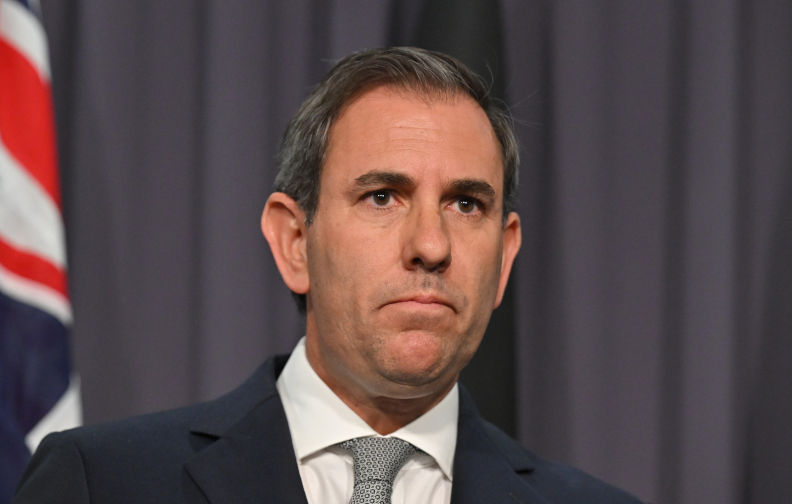
Treasurer Jim Chalmers and his colleagues should take notice. Chalmers has spoken about intergenerational fairness and substantial reform.
You would think that with a massive House of Representatives majority, an easy path through the Senate, an opposition in disarray, and more than two years before the next election, that the government could put economics before politics and deliver some substantial reform which would benefit us all in the long run.
Substantial reform has to be more than partially rewinding the corrosive Howard-Costello tax policies (capital-gains concessions, higher immigration and the like) that have got us into this mess in the first place.
The changes needed are obvious, almost too obvious to list. Fundamentally, tax on labour is too high and tax on capital and consumption too low. And there are far too many economically distorting tax concessions which help the wealthy and older people and too many taxes on things that should be tax free which would help housing and employment for the young.
Chalmers seems to be keen for some big changes, but – puzzlingly – convincing his Cabinet colleagues is another matter.
Younger people are clearly getting a raw deal which could lead them to become disaffected. And since the last election we know where the disaffected vote has been going: One Nation.
If more young people vote One Nation a lot of Labor seats will be threatened. Last election Labor got just 34 per cent of the primary vote and 63 per cent of the seats. So, just a little drop in the primary vote will result in a large drop in seats won.
The support of 18-34 year-olds for One Nation has gone up in line with the party’s overall vote over the past year or so, but it is still now significantly lower than other age groups, according to Roy Morgan opinion polls.
At 15 per cent, it is half that of its support among the 50-to-64-year-old cohort. But all that might mean is that there is some low-hanging fruit for One Nation among young people disaffected (to use a mild word) with a system which makes home ownership near impossible and saddles them with HECS debts nudging $30,000.
Labor should weigh up the cost of annoying a shrinking cohort of older, wealthier people milking the capital-gains-negative gearing distortions against the greater cost of failing to address the legitimate gripes of an expanding cohort of younger people, who are the future of the country.
Most of the former are not going to vote Labor anyway, unless they are doing so for moral rather than economic grounds. A lot of the latter are Labor/Green voters and are there for the losing.
Turning to the Superpower Institute’s carbon proposal, it has enormous benefits. It would more than wipe out projected inflation-driving Budget deficits. It would remedy the present situation where big companies dominated by foreign shareholders extract our gas for little of no royalties or tax while providing minimal employment.
It would encourage clean energy and energy self-sufficiency, needed now more than ever with the Iran war.
On housing, we should give up fuelling the fire with grants and subsidies and reduce the demand generated by immigration. The states have been hopeless at dealing with stamp duty. The Federal Government should step in and replace stamp duty and payroll taxes with a federal property tax which would be returned to the states.
At present we are taxing the very things we want to encourage: empty-nesters downsizing (as Baby Boomers approach age 80) to free up real estate and employment.
We should remove tax deductions for private health insurance (of its nature, it is private and not warranting a deduction) and remove exemptions from the Medicare surcharge for high income earners with private insurance. The private system does not cover serious cancer, heart, and emergency cases. So those who earn more should contribute more to the public system. The money raised should be put into the public system to lessen the need for private cover.
We should remove the remaining nuisance tariffs for efficiency and to help fight inflation.
Tinkering at the edges will not cut it this Budget. It will only increase voter disaffection and decrease support for the major parties which seem increasingly paralysed by electoral nervousness. Labor risks becoming as irrelevant as the Liberal Party unless it sees that doing some big changes for efficiency and fairness carries less risk than doing little.
Republished from CrispinHull.com.au, 17 March 2026