Why delaying the Trump-Xi Summit could anchor global stability
March 26, 2026
The postponement of a US–China summit reflects domestic constraints and shifting global leverage – not just competing priorities – and may open space for recalibration with China.
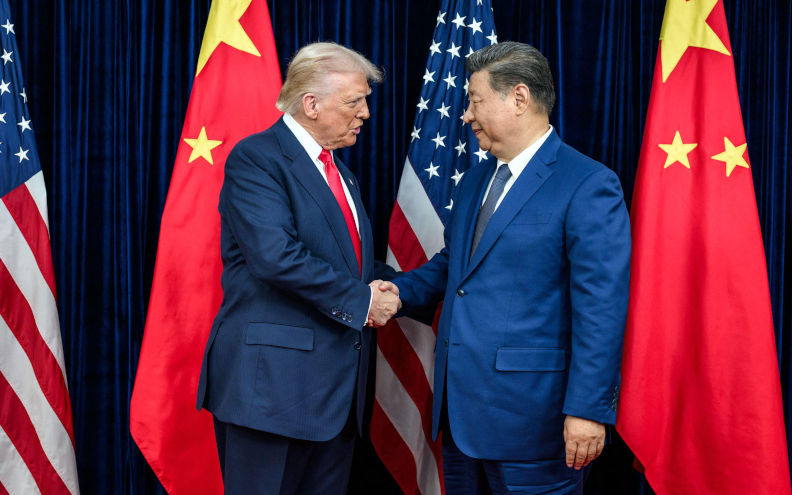
President Donald Trump’s highly anticipated visit to Beijing, the first by a sitting US president in nearly a decade, has been officially postponed by “a month or so.” The administration has publicly attributed this abrupt delay to the immediate demands of managing the escalating US-Israel war on Iran.
The prevailing narrative in Washington frames this postponement as a simple matter of shifting priorities, putting wartime crisis management ahead of diplomatic engagement.
Yet, this conventional wisdom overlooks a much deeper strategic reality.
The delay is a calculated US stall tactic. It is driven by unresolved domestic trade disputes, unexpected shifts in global supply chains, and the stark realisation that Washington’s current negotiating hand is structurally constrained.
Yet, this delay offers an unexpected strategic opening. Washington and Beijing are stepping back from an immediate, high-stakes confrontation. This inadvertently creates a window to reassess geopolitical priorities. Paradoxically, this pause could serve as a crucial catalyst for long-term global stability.
To understand the delay, look past the Middle East and examine the turbulence within US domestic trade policy. The administration is currently managing the chaotic fallout from the Supreme Court’s February ruling against the use of the International Emergency Economic Powers Act (IEEPA) for broad tariff implementation. This legal defeat requires navigating complex customs refunds totalling roughly $167 billion to over 300,000 businesses: an administrative nightmare that severely undercuts the executive branch’s previously alleged economic autonomous authority.
To maintain leverage ahead of the Beijing summit, Trump invoked Section 122 of the Trade Act of 1974, attempting to impose a temporary 15 per cent global tariff. Yet, this aggressive manoeuvre has triggered fierce legal pushback, including an active lawsuit from two dozen US states seeking an immediate injunction. The United States Supreme Court is likely to strike down these tariffs on the same grounds as the IEEPA tariffs: under the US Constitution, the power to tax citizens resides exclusively with the legislative branch, not the executive.
The administration needs crucial time to resolve these domestic legal battles.
After the Supreme Court’s ruling in late February, entering high-stakes negotiations with President Xi Jinping without Trump’s unilateral authority to enforce sweeping tariffs would leave the United States without a credible economic threat.
Furthermore, postponing the summit serves the dual purpose of avoiding immediate geopolitical friction.
Washington desperately wants NATO and China to assist in reopening the heavily contested Strait of Hormuz. Because Beijing is highly unlikely to intervene militarily in the region, forcing a meeting now would only highlight a glaring diplomatic impasse.
A secondary assumption in western policy circles is that the US can utilise global energy disruptions to wring concessions from Beijing.
Theoretically, the closure of the Strait of Hormuz poses an existential threat to China, which traditionally purchases roughly 90 per cent of Iran’s crude exports. The Trump administration is likely adopting a wait-and-see approach, calculating that a month of energy supply shocks will soften Beijing’s negotiating posture.
Market realities and shifting US policies are rapidly blunting this leverage.
Despite the conflict, trade data indicate Iran has successfully exported over 16 million barrels of oil primarily to China since early March.
More importantly, Washington’s own attempts to stabilise global energy markets have inadvertently shielded Chinese supply chains. By temporarily easing sanctions on Russian oil to lower domestic gas prices, the US fortified Sino-Russian energy integration. China is now importing over two million barrels per day of discounted Russian crude, absorbing nearly 48 per cent of Moscow’s seaborne exports.
While Chinese state refiners like Sinopec have reduced processing rates by roughly 10 per cent, or 1.5 million barrels a day, due to Middle Eastern bottlenecks, the macroeconomic impact remains highly muted.
A broader domestic economic slowdown in China, combined with structural shifts like the continued adoption of electric vehicles, has naturally suppressed aggregate energy demand.
Beijing is simply less susceptible to external energy coercion today than it was a decade ago.
By treating the summit purely as a bargaining chip, Washington risks missing a critical window to stabilise a fracturing global order.
Stretched thin by global instability, the US is managing taxing conflicts in Eastern Europe, the Middle East, and Venezuela. This burden may soon grow, as the administration has recently signalled that military intervention in Cuba is being considered.
If the administration were to cancel the meeting entirely, it would forfeit an opportunity for diplomatic realignment on par with Richard Nixon’s historic 1972 visit to China.
As Washington expends military and economic capital across multiple theatres, Beijing has adroitly positioned itself as a champion of multilateral dialogue.
China maintains deep, functional economic ties with nearly all major actors involved in the current crises.
If the US prioritises the reopening of critical maritime trade routes and the stabilisation of global supply chains, it will inevitably need to lean on China to act as a mediating broker. This operational reality demands a pragmatic shift away from an intensely adversarial posture.
Former Secretary of State Henry Kissinger famously observed that “America has no permanent friends or enemies, only interests.”
In an era of eroded trust and severe economic fragmentation, mitigating conflict is a mutual imperative. It is a shared interest that simply supersedes ideological differences and economic competition.
Washington must use this temporary delay not just to litigate its tariff authority, but to recalibrate its broader strategic objectives.
Relying on maximalist economic threats and the assumption of Chinese energy vulnerability is a fragile strategy.
When the rescheduled summit finally convenes, Washington must be ready. American negotiators must capitalise on shared interests in global stability. Pragmatic cooperation with China is no longer a diplomatic luxury. It is a stark necessity.