Why I risked prison to add a 'Losing Sound' to poker machines
March 5, 2026
Poker machines are designed to celebrate wins but stay silent on losses. A new project aims to disrupt that psychological design by introducing a simple losing sound – and to push for legislative reform.
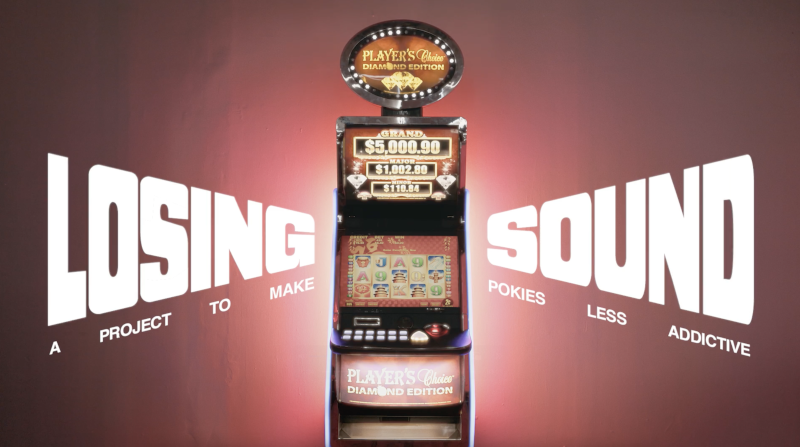
Did you know poker machines don’t have losing sounds? Most players don’t even know. Maybe that’s why Aussies lose $12 billion a year on them? My new project, The Losing Sound, aims to make pokies less addictive, simply by breaking the silence.
For me, the insight started at the local pub.
It was a lunch catch-up with some old school friends. Annoyingly, they all love to play. While I was standing in the pokie room twiddling my thumbs, I realised the room was full of winning sounds but devoid of losing ones.
The realisation hit a raw nerve. I had recently watched a close relative lose $150,000 to the pokies in just one year. They slapped away the credit cards, the children’s bank accounts, and an entire house deposit, breaking their family apart.
I became very angry, until I overheard the pokies at that pub. There was not a single losing sound coming out of them. It changed my view. I was less angry at the person and more angry at the machines.
I decided to build a machine that actually acknowledged a loss. But getting my hands on one meant taking a massive risk. Movie prop warehouses, party hire sites, and even Instagram ads came up empty.
Eventually, I had to buy one illegally. I won’t go into the full details, but think back alley, intimidating characters, a brown envelope of cash, and the hefty risk of 12 months in prison if I got caught.
Teaming up with Rumble Studios and Milos Photography, we engineered a psychology-informed sound. We leaned heavily on the “game-over” sounds from iconic 8-bit video games – cues already hardwired into our brains to signal something negative. Existing machines are audibly silent on losses to keep gamblers in a trance; the new sound was designed to jolt them back to reality.
To test it, I recruited casual players via Facebook, specifically avoiding anyone with a heavy addiction to ensure the experiment wouldn’t trigger a destructive spiral.
In 30-minute test sessions, players began completely unaware the machine had been altered. But they soon felt discomfort and realised something was different. The results were drastic: loss awareness increased, and the urge to keep playing halved.
Once the players were informed that machines currently didn’t have losing sounds, they felt more cheated than ever before.
The experiment can be watched here:
Now, backed by addiction recovery specialists Ron Isherwood and Kerrie Atherton, this campaign is pushing for legislation. We need 20,000 petition signatures to officially earn a debate in parliament.
Gambling addiction destroys families and lives. If this project helps players become more aware, that’s a win. If it helps Canberra become more aware, that’s a jackpot.