A new museum every 1.5 days: what’s driving China’s massive cultural expansion
April 7, 2026
China’s rapid expansion of museums and galleries reflects a coordinated strategy to shape national identity, manage historical narratives and project cultural influence at home and abroad.
From state-backed mega museums to privately-funded contemporary art spaces, the expansion of China’s galleries, libraries, archives and museums – or “GLAM” – sector is reshaping how the nation narrates its past and imagines its future.
China’s museum sector has expanded at an unmatched pace this century. From 2010 to 2024, a new museum has opened, on average, every 1.5 days. There were 382 new museums registered in 2022 alone – and a total of 6,833 registered towards the end of 2024.
None of this is a coincidence. China’s museum boom reflects a coordinated national strategy that links heritage, urban development, the creative industries and soft power.
The broader GLAM sector has expanded in parallel, with significant government investment in public libraries, archival digitisation projects and large cultural precincts. Museums, however, remain the most visible symbol of this transformation.
China is reported to have had only around 25 museums when the Communist Party gained power in 1949. For several decades, museums would remain relatively limited in number and scope – and would be strictly controlled by the Chinese Communist Party (CCP). These were didactic spaces shaped by strict ideological parameters.
In May 1942, CCP Chairman Mao Zedong chaired a three-week forum where he argued there is no art detached from, or independent of politics. Cultural policies thereafter retained revolutionary aims under the CCP. Dedicated “work units” managed all artistic creation up until the end of the Cultural Revolution (and Mao Zedong’s death) in 1976.
This made way for the Open Door Policy led by the nation’s new leader Deng Xiaopeng in 1978. With the slogan “to get rich is glorious”, this policy led to significant transformation in leadership and belief systems. The 1970s to 1990s marked a period of relative openness and avante-garde expression.
The 1990s and early 2000s further saw a gradual liberalisation of the sector, alongside the rise of contemporary art. Independent artist-run spaces flourished in cities such as Beijing, Shanghai and Guangzhou – often in repurposed factories or warehouses.
Today, however, grassroots initiatives have mostly been consolidated into state-zoned cultural districts. Beijing’s 798 Art Zone – which now hosts more than 150 galleries – is one of the first examples of this shift. What began in 2002 as a space for independent artist-led experimentation became part of a structured cultural economy from mid-2003.
Generally, there are drivers behind such consolidations:
- regulation and stability: formal zoning provides clearer legal frameworks and allows for easier monitoring
- economic optimisation: state-sanctioned and aligned cultural districts are more likely to attract tourism and real estate investment
- narrative alignment: institutional oversight ensures exhibitions operate within acceptable ideological boundaries.
This curated cultural strategy has been rolled out through a number of successive five-year plans. In the most recent ones – including the draft outline of the 15th Five-Year Plan (2026-2030) – museums have been framed as instruments of national storytelling.
They allow the state to curate narratives that promote social cohesion, while balancing global discourse with national priorities. And this is central to China’s ambition to become a cultural superpower.
So what’s on offer?
Broadly speaking, there are four major categories of museum: historical and archaeological museums; revolutionary/party history museums; science and technology museums; contemporary art museums and private institutions.
At the Sanxingdui Museum in Sichuan (opened in 2023), audiences can view 4,000-year-old relics from the Shu civilisation. Or they can experience multimedia works inspired by Chinese mythological creatures at The Hong Kong Palace Museum.
Science and technology museums have multiplied, as have industrial heritage centres and niche institutions dedicated to ceramics, design and animation.
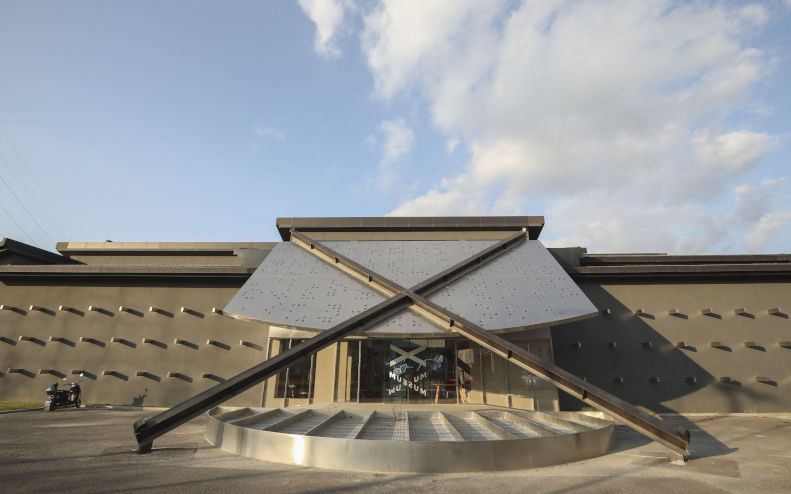
Private contemporary art institutions such as [Beijing’s X Museum] and UCCA position themselves within international art circuits. Yet, even these operate within broader municipal planning frameworks.
The nation’s museum expansion is highly structured. The National Cultural Heritage Administration sets targets for development, encourages free public access policies, and supports digitisation initiatives.
For citizens, expanded access has democratised cultural participation. For local governments, museums can be used to anchor urban redevelopment projects that help with city branding and tourism.
A broader cultural renaissance
China’s rebranding of itself through its creative industries is not a phase. It’s part of the building of the nation’s identity. The goal isn’t merely to preserve, but to project – to shape both domestic identity and global perception.
Smaller experimental and independent voices may struggle within this increasingly formalised framework. Writing for the Australian Institute of International Affairs, research assistant Guang Yang questioned how much room exists for dissenting or marginal histories when ideological parameters are embedded in national storytelling projects.
Museums curate memory, define heritage and stage visions of the future. The growth in China’s museum sector signals a nation investing heavily in how it sees itself and how it wishes to be seen.
Republished from The Conversation, 19 March 2026