A prime-time hit job on renewables falls apart under basic facts
April 21, 2026
Spotlight’s TV report on renewables and EVs collapses under basic fact-checking, highlighting how misinformation is shaping Australia’s energy debate.
The recent Senate inquiry into climate and energy misinformation and disinformation unveiled some shocking evidence about the nature of attacks against climate science, renewable energy, EVs and other green technologies.
As Anne Delaney wrote last month, multiple submissions detailed coordinated “astroturfing” campaigns, including fake social media accounts impersonating real Australians to manufacture opposition to renewable energy projects, alongside widespread use of misleading political advertising.
Experts told the inquiry that digital platforms are amplifying false and distorted claims through opaque algorithms, while the rapid rise of artificial intelligence is accelerating an explosion of deceptive content.
Disturbingly, such campaigns have also become a feature of some mainstream media, and it seems our major TV networks are no exception.
Spotlight, the so-called flagship current affairs program on the 7 network, dedicated more than an hour on Sunday evening on a report into the supply chains feeding into the renewables and EV industries, with a particular focus on cobalt mines in the Congo, and also activities in Australia. It was amplified on Murdoch and social media.
It fell over at the very first fact-check. “Every battery, every electric vehicle, every piece of so-called clean energy technology today” uses cobalt, reporter Liam Bartlett claimed at the start of the program.
Wrong.
Nearly every big battery installed in Australia these days uses (LFP) lithium iron phosphate chemistry, which means no cobalt, and no nickel (that’s relevant because Bartlett did a similar hit job on the nickel industry last year, using that as a platform to attack EVs and renewables).
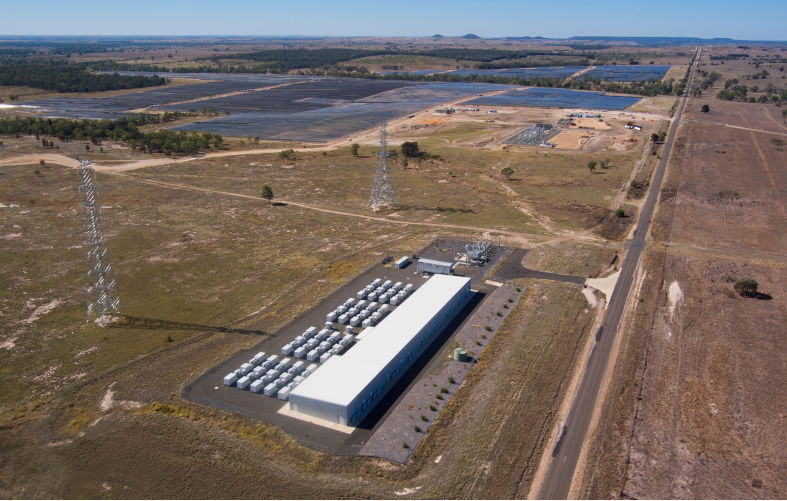
Tesla, the biggest supplier to big batteries in Australia, now uses only LFP batteries for grid scale batteries. No cobalt. The two big batteries at Liddell and Tomago being built for AGL Energy by Fluence are LFP. No cobalt. A spokesperson for Fluence said all its batteries in Australia use LFP. “We don’t use cobalt.”
Finland-based Wartsila, which is building the country’s biggest grid battery at Eraring for Origin Energy, also uses only LFP for its battery projects in Australia. No cobalt.
It’s a similar story with EVs. Tesla, for instance, uses only LFP chemistry for most of the variants of its best selling Model Y and the Model 3. No cobalt. It uses NMC chemistry (which does include cobalt) only in “performance” variants, which amounts to about 10 per cent of sales.
Home batteries, which are now being installed at record rates in Australia, are the same. New market leader Sigenergy uses only LFP chemistry, so no cobalt, as does another market leader Sungrow, and most others.
Bartlett claims to be appalled by the conditions in some cobalt mines in the Congo, and the nickel mine in Indonesia. And so he should be. So should everyone.
But the inconvenient truth is that these mines have been operating for decades, and cobalt has been used widely in many industries.
The mineral is essential for the iPhone that Bartlett presumably uses, for the laptop he writes his stories on, for the jet engines that flew him from Australia to Africa, and for widespread use in medicine (hip and knee replacements), the petroleum industry, the manufacture of tools, for construction, for cosmetics, and even ceramics.
The use of cobalt in EV and grid batteries is relatively new, and is already moving on. Where it is used, most EV makers are at pains to point out that the mineral does not come from such mines, and they produce blockchain style tracking reports to underline their claims.
But Bartlett did not seem particularly interested in balance, or inconvenient detail. His story had three major themes – he doesn’t like the Chinese, he doesn’t like renewables and EVs, and he doesn’t like federal Energy and Climate Minister Chris Bowen.
“Bowen’s fanatical approach, aided and abetted by a conga line of true believers and latte-sipping Teal supporters is now set to send the country into bankruptcy,” Bartlett wrote in an op-ed also published on 7’s website.
He appeared to have former Greens leader Bob Brown on his side when discussing the Rosebery zinc, copper and lead mine in Tasmania, which had been seeking approval to pipe waste across the Pieman River into a new tailings dam they wanted to build in the Tarkine (also known as Takayna).
Brown and his eponymous foundation have been leading calls to have the Tarkine declared a national park, and given World Heritage status, such is the value of its ancient forests and fauna. Brown has been appalled by the incursions already made by the mining industry into the area.
The problem is that Rosebery has been operating for nearly a century (it was opened in 1936), long before renewables and EVs were a thing. And the good news is that – since the interview with Brown in front of a giant Myrtle tree in the Tarkine forest – the mine owner MMG has changed its plans.
It now proposes a new tailings dam on its side of the Pieman River, out of the Tarkine wilderness area. It was a massive victory for the Bob Brown Foundation, whose blockades of MMG machinery drew more than 2,000 forest defenders and led to more than 100 arrests since 2021.
The change was announced in February, two months before the program went to air. There was no mention of that development when the program went to air on Sunday, although MMG did confirm this in a statement to the program that was published on the Spotlight website.
Bartlett also interviewed Steve Nowakowski, once a senior office holder at the now disbanded Rainforest Reserves, a lobby group that advocated nuclear power and was the subject of searing criticism in the Senate inquiry.
Nowakowski, a cartographer, has been widely amplified in the Murdoch media and has been accused of grossly exaggerting the impact of wind and solar farms on the Australian landscape. A map published by Rainforests Australia included wind farms that did not in fact exist.
The real target of Bartlett, however, was Bowen. Bartlett wrote on the Spotlight website that “the myopic green dream of energy minister Chris Bowen and his co-cabinet ideologues has left us all exposed.”
He wondered:
“If the war with Iran has done nothing else, it’s given us all a real-world, real-time lesson in what truly runs our lives.
“A brutal reminder of which fuels actually matter and what government must do to protect the chain of supply and hence the livelihoods of its people.
“But why do we need reminding at all? How can it be that such an energy-rich nation manages to find itself vulnerable in an energy crisis?”
The answer to that last question is simple. Australia needs to decrease its reliance on fossil fuels, not increase it. And if the environment is in any way important – which it is – then the transition must happen as quickly as it can.
Bartlett – who was global head of TV, creative visual at oil giant Shell in London from 2013-2015 – is clearly an environmentalist at heart. But perhaps his anger and his outrage should be vented towards the industries that benefit most from these appalling mining conditions.
In the case of the Indonesian nickel mine, it was the steel industry, in the case of the Congo cobalt mines, it is just about everything else. Perhaps he should join the Bob Brown Foundation.
Republished from Renew Economy, 21 April 2026