Climate change, the community and the Coalition: going slower
April 14, 2026
The Coalition’s abandonment of net zero by 2050 marks a retreat from climate action, putting it at odds with public opinion and weakening Australia’s long-term response.
When last year the National and Liberal parties abandoned their commitment to ‘net zero by 2050’, they did more than re-set their policies on climate change. They weakened them by telegraphing their lack of enthusiasm for the renewables transition.
‘Net zero by 2050’ had seemingly become bi-partisan, a marker of a national Australian consensus that climate change was important, problematic and needed to be dealt with at least to a degree and with us playing a part. It created a sort of base-line beginning, not bold or striking out with world-leading verve, but nonetheless establishing a base to be built upon. The conservatives’ abandonment of it felt like a severe blow to an important hope.
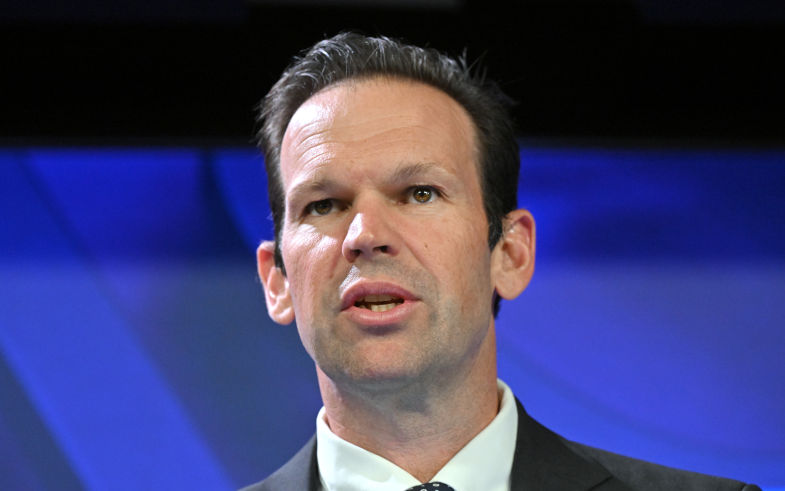
Ever since, and now with Matt Canavan as Nationals’ leader, there has been a doubling down on the new position. Canavan sees net zero as a barrier to his re-industrialisation ‘revolution’, a sacred cow that must be slaughtered if economic progress is to be achieved. Net zero, he said last week at the National Press Club, is madness. So, then, must be the continuing transition to renewables.
For Canavan, economic growth and national security are everything and bound closely together, and if environmental concerns get in the way of those things they cannot be allowed to stand. There has been no sense in his utterings that we must find ways to have all of them, let alone any semblance of the notion that in the longer term the human race must find ways to rein in economic growth in its finite world. Growth, forever, remains holy to the Canavans of the world.
The conservatives’ new stance on net zero had been brewing for some time. The previous Nationals’ leader, David Littleproud, had laid the groundwork for Canavan by arguing for a greater commitment to adaptation to climate change. There is a place for adaptation, but it does not address the problem of climate change itself and pushing hard towards it risks stepping away from the reduction of fossil fuel use and thus the taming of greenhouse gas emissions. A greater commitment to adaptation, if it is to replace progress towards net zero and beyond, leaves atmospheric temperature increases less likely to be challenged and thus increases the likelihood of ‘runaway’ temperature rise and serious consequences including substantial increases in sea level as a result of the melting of the Greenland and Antarctic ice sheets.
Canavan is considering none of this: there was no mention of any of it in his National Press Club address.
He is close to saying that addressing climate change no longer matters. Policy action on it, he believes, will damage economic growth and national security.
The Coalition is out of step with public opinion here. Polls vary, but some things are clear: about 80 per cent of Australians believe climate change is occurring (the figure is higher for young adults) and that it is bringing or will bring problems, and a similar proportion wants stronger government action to deal with it.
Outright denial remains present in some sections of the community, as does the notion that mere humans cannot possibly affect something as vast as the atmosphere. Some still argue that climate change has always happened and humans have always adjusted – so we should not worry about it. And it is still not hard to find people who think that Australia is too small and insignificant to have any impact on climate change and so does not need to make an effort that might create some pain in terms of living standards.
“Leave the job to China and India” might be their prescription. Those countries, with their huge populations, pollute the atmosphere far more than our mere 27 million people can.
But there is a sense that these are ‘rump’ positions, held by fewer people now than two or three decades ago when climate change was still becoming a mainstream concern. The overall position of Australians is that there is an issue here that is serious and has genuine potential to become more so.
Most people recognise, too, that we must be thinking long term, that is in terms of decades and centuries. This is of course problematic in politics, where the three- or four-year election cycle always has the potential to derail initiatives focused on the longer term. But many people now with us will still be alive in 2100, and current trends in temperature and sea level have momentum which by then might produce truly serious consequences. If some of the environmental ‘tipping points’ which have been mooted have been reached by that time – the collapse of ice sheets and resulting sharp increases in global average sea level – many coastal cities will find themselves in dire circumstances. Adaptation as a primary strategy (sea walls and the like) might have become thoroughly futile. Some large coastal cities are already in some trouble on this score, Jakarta for one.
The world is waiting for real action on climate change to be initiated. Countries are looking at each other for signs of purposefulness. Holding off or going slowly might eventually look like a mistake, because the solutions are likely to become harder to implement, not easier. Australia is showing no appetite to lead, and Canavan has made the grasping of a leadership stance less likely. For a nation with high per capita greenhouse gas emissions by global standards and huge profits still to be made by exporting fossil fuels, this does not bode well. A concern that global politics might at some stage force us to limit our exploitation of fossil fuel resources is another thing that encourages us to go harder in the short term.
Nothing bodes well for climate change action soon.