Environment: Nature is in decline – and we are funding the damage
April 12, 2026
Glaciers are disappearing, biodiversity loss is accelerating, and governments continue to spend far more destroying nature than protecting it.
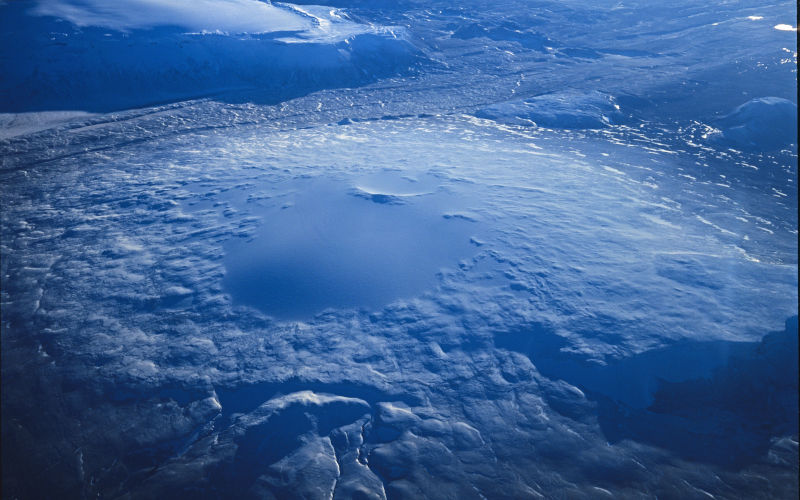
Is tourism harming glaciers?
Glaciers are disappearing worldwide, as demonstrated in the figure below (the amount of glacier ice in 170 monitored glaciers in 1970 is the reference point).

At average global warming of 1.5oC (where we are now effectively) 2,000 glaciers will be gone by 2050; at 4oC, it will be 4,000. Mind you, I think it’s crazy to be even thinking about warming reaching 4oC, we have no idea what the consequences of this level of warming will be for humans or the environment, except to say that it will in multiple ways be disastrous. Anyway, back to glaciers.
Glaciers have long been tourist attractions but with global warming turning them into endangered species, their popularity has increased greatly for a variety of reasons: appreciation of their beauty and power, last-chance tourism, learn about glacier retreat, understand global warming, and simply bear witness, for example.
But the loss of a glacier is no different to any other aspect of the natural environment that disappears. It isn’t just the loss of the particular animal, plant, micro-organism, free-flowing river or glacier that matters, it’s also the predictable and unpredictable consequences of that loss. As glaciers recede and then disappear, landscapes are changed, ecologies are destabilised, water sources for the environment and humans are disrupted and lost, natural (or rather unnatural) hazards are increased, and Indigenous lifestyles, traditions and cultures are destroyed, to name just a few of the more obvious flow-on effects.
Unfortunately, efforts by the glacier tourism industry to protect their business model (e.g., geotextile covers on melting glaciers, snow farming, cable cars and helicopter trips) may have unexpected undesirable local effects while failing to do anything to tackle the underlying global warming, possibly making it worse.
For many humans, the melting of glaciers creates a sense of personal loss and mourning (sometimes referred to as climate anxiety, ecological grief or solastalgia) and this has been expressed in public ritualised displays of concern and mourning such as the “glacier funeral” for Iceland’s Okjökull glacier in 2019. These events are shared acts of support, celebration, sorrow, commemoration, reflection, awareness raising and protest and can function as “letters to the future” about what has been lost. They might also be expected to provoke greater political engagement and climate action among the participants and observers.
The article’s authors conclude that, “Glaciers have evolved from passive indicators of climate change. They sit at the intersection of last-chance tourism, ecological mourning, short-term adaptations and political mobilisation, revealing the deep contradictions that characterise nature-based tourism in a rapidly warming world”.
They call for greater understanding of how the recent surge in glacier tourism is transforming people, places and landscapes, and research into adaptation strategies, processes of public mourning and commemoration and whether they do lead to personal and political pro-environmental behaviour, and how to prepare for future deglaciated areas.
Thirty times more spent on destroying nature than conserving it
According to the Intergovernmental Science-Policy Platform on Biodiversity and Ecosystem Services (IPBES – a body similar to the UNFCCC but for nature), inadequate incentives perpetuate harmful business-as-usual practices and perverse incentives create barriers to companies conducting their activities in ways that could reverse the increasing biodiversity loss.
In 2023, global public and private flows of finance with direct negative effects on nature totalled US$7.3 trillion. Private investments accounted for two-thirds of this and public subsidies one third. Conversely, only US$220 billion (3 per cent as much) was directed to activities that contribute to the conservation and sustainable use of nature and preservation of biodiversity.
The health and wellbeing of women and girls, young people, rural communities and Indigenous Peoples is especially vulnerable to the negative impacts of businesses on nature. Industrial development threatens approximately 60 per cent of Indigenous lands globally.
The summary for policymakers of the IPBES report emphasises that for businesses to play a central role in reversing biodiversity loss, current operating conditions need to be changed to create an enabling policy and legislative environment, one that provides incentives for the conservation and sustainable use of biodiversity, including the integration of social and human rights issue into a company’s consideration of their impacts on nature.
Within Australia, researchers Paul Allan Elton and Hugh Possingham have severely criticised the Australian government’s recent Seventh National Report to the Convention on Biological Diversity. According to the authors, by citing government intentions and promises as evidence of the country being on track, the government has given itself an almost completely unjustified “glowing report card” on Australia’s progress under the Global Biodiversity Framework.
“This is wrong,” they say. “Ecosystems are being left to degrade, rare and precious species are sliding toward extinction, and billions of dollars are being used to quietly fund subsidies, including for fossil fuels, which contribute to the very destruction the government claims to be fixing.”
Possingham and Elton identify four important targets that expose the real story:
- Restoration of degraded ecosystems is falsely reported as being “on track” while the amount government spends on restoration is an order of magnitude too small.
- The government focuses on the amount of land that is protected (currently 25 per cent it claims) but fails to pay attention to the requirement that the land in the 30 per cent target is ecologically representative and well-connected.
- Australia may not have suffered any further extinctions recently but the threatened species we have are declining not recovering.
- The government uses creative accounting to inflate conservation spending but the reality is that it spends more than $26 billion per year on subsidies that harm nature and less than $1 billion per year conserving it.
The authors conclude: “This important report – with its hidden subsidies, inflated spending figures, missing implementation plan, and a definition of “on track” that mistakes promises for progress – is not worthy of a nation with both the means and the obligation to lead.”
Why do we sleep?
Jellyfish and sea anemones sleep for about eight hours a day even though they don’t have a brain. In fact, all animals with a nervous system sleep, despite the obvious vulnerability associated with being unconscious. It seems that sleeping evolved early in animal evolution and that its ubiquitous persistence is not pure chance.
We all know from personal experience that we need to sleep. Not so obviously, research shows that when we and other animals are asleep cells are repaired and energy restored. But how might sleep provide an evolutionary advantage for the species rather than just bodily maintenance for individuals?
When animals are awake their DNA is damaged by a range of mutagens, for instance exposure to UV radiation and enzymes in the nucleus. This may not matter too much with cells that rapidly replace themselves (e.g., cells that line the bowel), but mature neurons, the basic building blocks of the nervous system, don’t routinely divide and replace themselves. This may make them very vulnerable to DNA damage and loss of function.
Research in sea anemones and jellyfish has demonstrated that sleep helps repair damaged DNA in neurons and this helps individual neurons to maintain their integrity. Helpfully, there’s a virtuous cycle here because DNA damage also promotes sleep.
Sea anemones and jellyfish have been around for a very long time – over 500 million years. This suggests that the capacity to repair DNA in neurons emerged early in animal evolution and has been retained for the obvious advantages it confers on individuals and species.
What I’d like to know is whether people who experience repeated periods of sleep deprivation suffer from earlier mental and neurological decline?
How hot will it be in 2100?
There’s a new online, interactive mapping tool that helps you see how temperatures will be changing around the world between the late 20th century and the end of this one. You can view several average temperature and hot day variables under moderate to high greenhouse gas emission scenarios for the periods 1986-2005, 2020-2039, 2040-2059 and the end of the century.
The global maps below display average temperatures during 1986-2005 and 2040-59. The latter period is just around the corner and provides an indication of what many readers will experience in the 2040s.
Interestingly, the location of the boundary that occurs at an average of 16oC (shades of yellow and orange warmer than 16oC and shades of blue cooler) does not change much between the two periods but within the two zones the hotter areas tend to get hotter while, perhaps less markedly, the cooler areas tend to get warmer.
These trends stand out more clearly when we look more closely at Australia,
In the USA between the earliest and last periods (approximately 100 years), the average temperature in each state increased by 2-3oC. Similar fine level data isn’t available in the tool for Australia but that’s roughly the current difference between Melbourne (14.9oC) and Adelaide (17.5oC) or Cairns (25.3oC) and Darwin (27.8oC).
State of the global climate 2025
Moving on from predicting what the climate has in store for us, the World Meteorological Organisation has told us what conditions were actually like in 2025. Here are just four of their many summary graphics.