Jewish voices challenge the war on Iran
April 9, 2026
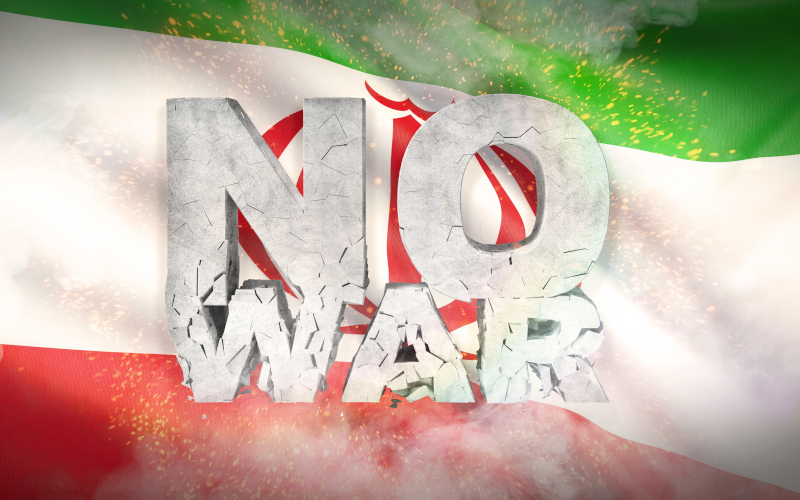
Dissenting Jewish organisations are challenging support for war on Iran, reframing Jewish identity around justice, international law and the equal value of all lives.
Recent research into Jewish alternative movements shows a rupture between state alignment and Jewish communities on issues such as Palestine and now on Iran. This rupture is visible in public statements from organisations such as the Jewish Council of Australia (JCA) and Jewish Voice for Peace (JVP), which have positioned themselves against military strikes on Iran. Their discourse reframes Jewish identity not as aligned with state power but as rooted in justice, international law, and the sanctity of all human life.
At a moment when some western governments, including Australia’s federal leadership, have signalled support for US and Israeli military action against Iran, dissenting Jewish voices have emerged with clarity and urgency.
While the Albanese government has publicly endorsed strikes on Iran under the argument of shared security interests, critics have pointed to deep legal and humanitarian concerns about such actions and their broader regional impacts.
In a 1 March 2026 media release, the Jewish Council of Australia explicitly condemned military strikes on Iran – urging the Australian government to “adhere to international law” and refrain from endorsing further military actions that risk civilian lives. It expressed deep concern about leaders, including Prime Minister Anthony Albanese, being among the few to publicly endorse these strikes, and criticised this stance as contributing to a pattern of violence that undermines global security. The JCA underscored that opposing an illegal bombing campaign “is not an endorsement of Iran’s brutal authoritarian regime,” distinguishing opposition to war from any political alignment with the Iranian state.
Earlier, in June 2025, the JCA had criticised Australia’s endorsement of US strikes on Iranian nuclear targets as an “illegal act of aggression,” warning that such actions fuel wider instability in the Middle East and compound civilian suffering – particularly in a context where Israeli forces were also conducting operations in Gaza. These statements reject dominant state narratives framing military action as defensive or stabilising.
Similarly, Jewish Voice for Peace’s 1 March 2026 statement denounced the “immoral and illegal war on Iran” and critiqued the expansion of “endless wars that could destroy the lives of tens of millions.” It centres the Iranian people’s longstanding resistance to oppression, noting massive protests and repression over decades, and situates the current conflict within a broader history of imperialism, regime change, and violence. The organisation’s language strongly challenges imperial narratives and asserts that “democracy cannot be claimed” through war and foreign intervention.
These organisations do more than oppose specific military actions; they critique the moral and legal foundations upon which those actions are justified. By rejecting the framing of war as a necessary tool for “security” or “defence,” they reframe it as unlawful aggression that inflicts harm on civilians and contravenes international law.
A striking feature of these statements is how explicitly they invoke Jewish ethical values. The JCA emphasises that its position is rooted in “Jewish values of justice, equality and the sanctity of life,” and insists that “every life is precious – Iranian, Palestinian and Israeli.” This inclusive valorisation of human life challenges assumptions that Jewish identity inherently entails support for state-backed security measures or military alliances.
The Jewish Voice for Peace statement broadens this ethical vision further by highlighting solidarity with Iranian civilians resisting oppression, and by situating its critique within a global justice framework that opposes “imperial warmongering.” In doing so, these organisations reclaim Jewishness as an ethical tradition prioritising the protection of civilians and adherence to universal norms over geopolitical alignment with powerful states.
Another defining feature of this discourse is its expansive view of solidarity. Both organisations emphasise the shared human vulnerability of civilians in Iran, Palestine, and Israel – rejecting hierarchies of suffering that often shape political discourse. This approach constructs a transnational moral community in which Jewish ethical authority aligns not with state agendas, but with humanitarian principles that affirm the equal worth of all lives.
In rejecting hierarchies of suffering, these statements refuse to privilege one group’s vulnerability over another’s. The JCA’s explicit assertion regarding the preciousness of Iranian, Palestinian, and Israeli lives illustrates an ethical commitment that transcends national or sectarian boundaries.
Importantly, both organisations address potential criticism that opposing war might imply support for authoritarian regimes. The JCA clarifies that opposition to bombing is not an endorsement of the Iranian regime, and Jewish Voice for Peace recognises the repression faced by Iranian protesters, thus maintaining ethical consistency: opposition to state violence does not equate to approval of authoritarian governance.
Perhaps the most significant discursive innovation in these statements lies in the redefinition of who claims to speak “as Jews.” Historically, critiques of Israeli or allied western military policies have often foregrounded the expectation that Jewish communities uniformly support such policies. The recent statements from JCA and JVP challenge this monolithic assumption.
By positioning themselves as Jewish organisations grounded in values of justice, law, and humanitarian concern – and explicitly opposing military actions undertaken by states claiming to act in collective Jewish interests – they disrupt the conflation of Jewish identity with state-backed geopolitical projects. This rupture opens space for a more plural understanding of Jewish political identity, one in which dissent and moral judgement are integral, not peripheral.
The discursive strategies employed by both organisations activate broader moral fields – legal, ethical, and humanitarian – that contest state-centric narratives. Through deliberate evaluative language, they construct an alternative moral universe where war is judged not by strategic interests but by its legality and human impact. This constitutes a form of moral resistance, in which language plays a central role in contesting dominant narratives and mobilising solidarity.
In doing so, these Jewish organisations demonstrate that public dissent is not only politically possible but morally imperative within communities often presumed to be aligned with state security agendas. Their interventions underscore the power of ethical language to reshape public debate, challenge assumptions, and redefine collective identities.
The statements from the Jewish Council of Australia and Jewish Voice for Peace reflect a broader shift in how Jewish identity is articulated in relation to war, law, and human life. By rejecting dominant state narratives, invoking Jewish ethical traditions, and foregrounding universal solidarity, these organisations offer a moral framework that is at once Jewish and transnational.
Amid escalating conflict and political polarisation, their voices remind us that ethical authority and cultural identity can be rooted in principles of justice and human dignity rather than in alignment with state power. In doing so, they not only oppose war on legal and humanitarian grounds but also contribute to a reimagining of Jewish identity – one that centres resistance to violence, respect for international law, and unwavering solidarity with all civilians.