The game goes on: football in a time of war
April 6, 2026
As conflict escalates, FIFA insists the 2026 World Cup will proceed unchanged. The decision reflects a broader pattern – institutions continuing regardless of reality, even in the presence of war.
Missiles are exchanged. Cities are damaged. Civilians are killed. Military planners speak openly of escalation, of widening conflict, even invasion.
Global markets respond in kind. Energy prices surge. Supply chains tighten. Economies strain under the weight of uncertainty. And in the background, the financial flows of conflict continue, alliances shift, resources are redirected, and nations like Iran play their part in sustaining broader geopolitical tensions, including support structures that intersect with Russia’s ongoing war in Ukraine.
And somewhere in the middle of this, a football tournament proceeds as scheduled.
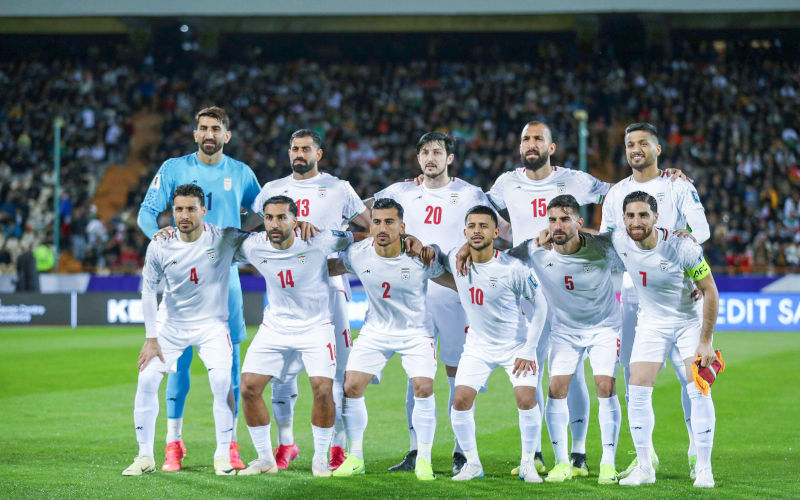
Iran, engaged in active conflict involving the United States and its allies, is expected to travel to American cities to compete in the 2026 FIFA World Cup. Stadiums will be full. Anthems will be played. The language of unity will be repeated. And FIFA insists there is no alternative, no Plan B, C or D. The tournament will go on.
Iran has requested that its matches be moved to Mexico, citing safety concerns. Mexico is willing to host. FIFA has refused. The schedule is fixed. The structure must hold.
This is presented as principle. Football, we are told, rises above politics. It builds bridges. It offers a space where nations can meet beyond conflict.
But this is not a time of tension. It is a time of war.
There have been strikes, retaliation, and mounting casualties. Civilian infrastructure has been damaged. Strategic calculations are underway that extend far beyond the boundaries of any football pitch.
To suggest that such a reality can simply be set aside, bracketed off for ninety minutes is not idealism. It is denial.
Sport has never stood apart from politics. It has always reflected it. Nations compete as nations. Flags are raised as statements of identity. Victories are absorbed into national narratives. When political tensions escalate, sport does not become neutral ground. It becomes another arena in which those tensions are expressed.
History makes this clear. Olympic Games have been boycotted in response to military action. Yugoslavia was excluded from European competition during war. South Africa was isolated under apartheid. Participation has always been shaped by the moral and political realities of the time.
What is different now is not the presence of conflict, but the refusal to allow it to matter.
FIFA’s position is not that the world is at peace. It is that the tournament must proceed regardless of reality.
This is not neutrality. It is abstraction.
The fixture list becomes the primary reality. War becomes a secondary complication, something to be managed around the schedule rather than something that might fundamentally alter it. The system continues because it is designed to continue.
Iran signals opposition to the United States while preparing, at least in principle, to compete on its soil. The United States signals that Iranian players will be welcomed, even as it remains engaged in military operations against the Iranian state.
Each actor operates within a contradiction it cannot resolve. Is this conflict dressed as celebration; opposition performed as participation? In this arena war is presented as unity.
This is not balance. It is unreality made functional.
This is not unique to football. It reflects a broader pattern in modern institutions. Once established, systems develop their own internal logic. They continue because they are structured to continue. External reality, even when it involves war does not automatically interrupt them.
Instead, it is absorbed.
The World Cup is not simply a sporting event. It is a vast commercial enterprise, tied to broadcast rights, sponsorships, and political commitments. To alter it would be costly and complex. And so it is not altered.
Language is used to stabilise the contradiction. Football “brings people together.” It “builds bridges.” It “offers hope.” These are powerful ideas. But they lose meaning when detached from the conditions they are meant to address.
A bridge that ignores the depth of the divide is not a bridge. It is a symbol.
To speak of unity while conflict expands, while economies destabilise, while global tensions intensify, is not to transcend reality. It is to step outside it.
There is a deeper consequence.
When institutions continue to operate as if nothing fundamental has changed, they reveal something about their priorities. The preservation of the system becomes more important than alignment with the world it inhabits - the game must go on.
But what is being preserved? Not peace, not unity, not even the integrity of sport. What is being preserved is continuity, the ability of the system to sustain itself, regardless of circumstance.
And that is the point at which the language of sport as a unifying force begins to collapse.
Because unity cannot be declared. It must be built within the conditions that exist. It cannot coexist comfortably with active conflict while pretending that conflict is peripheral.
FIFA does not sit above war. It simply proceeds as though war sits outside its field of concern.
If the World Cup proceeds under these conditions, it will not demonstrate the power of sport to rise above conflict. It will demonstrate something far more troubling.
That even in the presence of war, the system continues, unchanged, unquestioned, and increasingly disconnected from the world it claims to represent.

