Identity, influence and division – Australia’s Jewish community in a time of tension
April 10, 2026
Amid rising tensions and a national inquiry into antisemitism, understanding the complexity of Australia’s Jewish community is essential to any serious conversation about social cohesion.
The Bondi massacre of Australian Jews will linger in our memory for many years, but a small sliver of time has now elapsed since the terrorist attack on December 15 2025. The early days of the Royal Commission into Anti-Semitism and Social Cohesion are an appropriate time to reflect on the characteristics of the Jewish community in Australia, offering some dispassionate analysis in the middle of extraordinary passion, anger and grief.
The Jewish community contains many paradoxes and contradictions. It is tiny and many of its members are now perceptibly fearful, but it is also clearly influential and full of high achievers. It is embedded in Australian society but under attack. While small in numbers, it is large in terms of organisational capacity and often vociferous in the public square.
All of this was already true on October 7 2023, when the murderous Hamas attack took place from Gaza across Israel’s southern border. The contradictions defined the response of the community. They have been evident across the two and a half years since, including the ‘Middle East’ politics surrounding the highly charged May 2025 federal election campaign decisively won by the incumbent Labor government, and the even more heightened politics since December 15 2025.
Central to Jewish Australian identity is the Nazi Holocaust during World War II, in which six million European Jews were murdered in the most awful circumstances. Australia has been home to a disproportionate number of Holocaust survivors. While only a few are still alive the story can never be forgotten by their families and by the wider community. It is constantly recalled whenever the community is discussed.
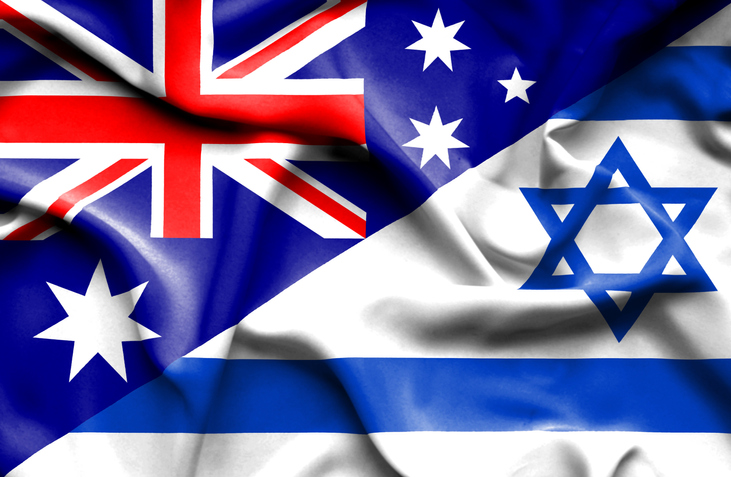
It has a split identity which is not entirely unique in Australian society but still distinctive. Its split identity between Australia and a foreign homeland – Israel – is like some other migrant communities, such as Australian Croatians and Serbians, for instance, and Irish Australian Catholics of an earlier era. Such communities with multiple identities are distinguished (and distinguishable) by their own flags, marches, clubs and associations, and religious ceremonies. Attachment to foreign countries and their religious and political leaders, including President Isaac Herzog of Israel, a controversial recent official visitor to Australia, are part of the package.
The Jewish community is largely politically conservative, though that has not always been the case. Historically it was pro-Labor because of its own drive for human rights and social justice and clear antisemitism in establishment and corporate circles. It had strong links with Labor Prime Minister, Bob Hawke. But over time several other factors, including perceptions of the Australian parties’ political attitudes towards Israel and the Middle East, led them away from Labor towards the Coalition parties. The Left became more pro-Palestinian, and the Right became more pro-Israel. After October 2023 the Jewish community clearly became more detached from the Albanese government, including occasions when it was publicly angry with the prime minister himself.
The community has also long been well organised, containing evidently well-resourced lobby groups, such as the Executive Council of Australian Jewry and the Australia Israel & Jewish Affairs Council, and high-profile business and civic leaders. Historically these have included Sir Isaac Isaacs and Sir Zelman Cowen, former Governors-General, and the Myer family. Today the most notable include business families, such as the Lowy family, advocates such as Mark Leibler and Alex Ryvkin, sporting notables, such as Olympian Jess Fox, and politicians including the former federal Treasurer and Deputy Liberal leader, Josh Frydenberg, and the former Labor Attorney-General, Mark Dreyfus.
There is, therefore, a Jewish lobby, overlapping with a pro-Israel lobby in Australia. There is nothing wrong with such terms, though to some the term ‘lobby’ is disreputable and is often used in a derogatory fashion by opponents. This is the case, for example, for the so-called gay lobby and the fossil fuels lobby among others. Australian society and politics are full of such lobbies, including ethnic and religious ones, which magnify the voices of interests. There is certainly a Catholic lobby and a Muslim lobby.
Such lobbies give these communities of interest greater leverage. Lobbies represent big groups who want to reinforce their position and smaller ones who are unhappy with their status or access to government. They are an entirely legitimate vehicle within a democracy, so long as their activities are transparent.
There is no doubt that antisemitism in Australia is longstanding. I was aware of casual antisemitism towards Jewish individuals from an early age growing up Catholic in Adelaide. The open question is rather how extensive it is now and how it compares in extent and intensity with other forms of hatred, racism and discrimination in society towards groups such as Aborigines and Torres Strait Islanders, Muslims (Islamophobia), the LGBTQIA+ community (gay hate), and people of colour generally.
Discussion of antisemitism also cannot be separated from anti-Zionism (itself a disputed term) and legitimate criticism of the state of Israel. There is little doubt both have increased during the current Israel-Hamas-Gaza war. Criticism of the Israeli government’s actions certainly has.
Discussion of the Australian Jewish community cannot be separated from the conduct of the Gaza War by the Israeli government of Benjamin Netanyahu. Within the Jewish community, as in Israel itself, opinions differ, sometimes fiercely and passionately. Jews opposed to the official lobby have formed new groups, such as the Jewish Council of Australia, to advocate their views.
The Australian Jewish community is not responsible for the actions of the Netanyahu government. Most Australian Jews, however, according to surveys, represented by different parts of the Jewish lobby, have pushed back against criticism and defended the Netanyahu government on this matter. The Jewish lobby has held Hamas not Israel responsible for the death and destruction and queried the veracity of the numbers of Gazan civilians killed.
Yet most Australians consider the Israeli government response, during which about 70,000 Gazans have been killed, to have been disproportionate at best and criminal at worst. If the 2025 federal election result is an indication, most Australians thought the ‘balanced’ approach of the Albanese government in difficult circumstances about right or perhaps, despite taking steps towards recognising Palestine, too pro-Israel.
Short term government measures to address social conflict and terrorism, such as new hate speech, anti-protest, and gun control laws, and increased police and intelligence powers, have been extensive at state and federal level. Many of them, however, have been gut reactions rather than measured steps. Longer term measures are elusive but include the Royal Commission. In the meantime, little peace has been achieved in the Middle East, Israel and the USA have attacked Iran once again, and Israel has attacked Hezbollah in Lebanon.
We must not shy away, during the life of the Royal Commission, from evidence-based discussion of the issues at stake. ‘Solutions’ remain few and far between. Middle East politics remains fraught. Social cohesion remains challenged. The Australian Jewish community, full of contradictions, will remain in the spotlight for the foreseeable future as these issues are discussed.

