When prisons expand, policy has already failed
April 21, 2026
Plans to convert a Covid quarantine facility into a prison reflect a justice system responding to pressure with infrastructure instead of addressing the drivers of incarceration.
When quarantine camps become prisons, something has already gone wrong.
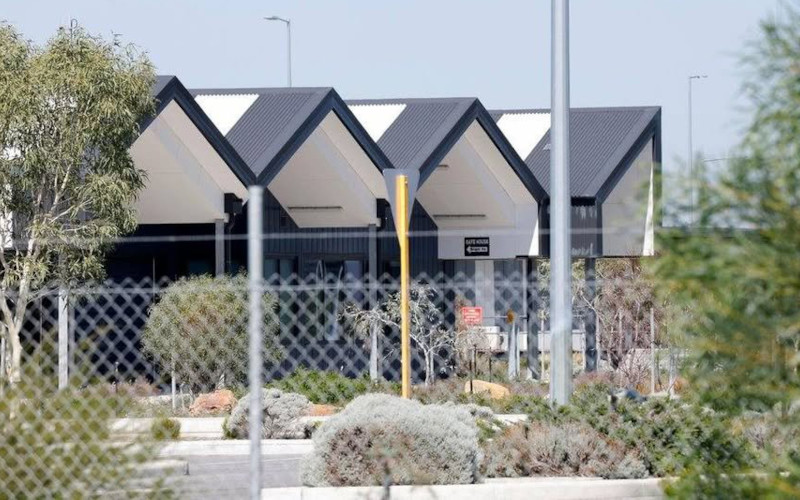
The Western Australian Government’s consideration of converting the Bullsbrook Covid quarantine facility into a prison reveals a justice system now operating beyond planning and into improvisation.
When governments begin repurposing unused pandemic infrastructure as prisons, it is no longer reforming. It is reacting.
The proposal comes in the context of custodial infrastructure under acute pressure. The state’s prison population has experienced rapid and “ unsustainable” growth over the past two years, ballooning by more than 1,000 prisoners in just two years. Facilities are overcrowded, people are sleeping on floors, staff are stretched. By the admission of those working within it, capacity is approaching its limits.
And so the response is to look for more beds.
But this is precisely the problem.
The logic is deceptively simple: more prisoners require more capacity. Yet this logic treats imprisonment as a fixed demand rather than a policy outcome. It assumes that rising prison numbers are inevitable, rather than produced; shaped by bail laws, policing practices, sentencing settings, and political choices.
The result is a reinforcing cycle: overcrowding drives emergency expansion, and expansion normalises higher imprisonment. And so it continues.
The Bullsbrook proposal sits squarely within this pattern. Built at significant public expense as a quarantine facility during the pandemic, the site now stands largely unused. Faced with prison overcrowding, government has turned to this idle asset as a potential solution.
The key pressure in Western Australia’s prisons, however, is not simply a lack of beds. It is the rapid growth of remand populations (people held in custody awaiting trial). Many are there due to tightening bail conditions and risk-averse decision-making, often in response to family and domestic violence.
This matters because remand populations are not easily accommodated in repurposed, low-security facilities. As the prison officers’ union has pointed out, the Bullsbrook site would require substantial modification to function as a prison at all, and even then, it may not meet the needs of this rapidly growing cohort.
In other words, the proposed solution does not match the problem. Rather, it reflects an inherent policy failure: the tendency to respond to pressures within current justice settings through infrastructure rather than strategy.
Building or repurposing custodial facilities is politically tangible. It demonstrates action. It reassures the public that something is being done. But it does not address the drivers of incarceration. It does not reduce inflow. And it does not make communities safer in any sustained way.
If anything, it entrenches the very dynamics that produced the crisis.
This pattern is not unique to Western Australia. Justice systems have become increasingly reliant on custodial responses, even as evidence accumulates that imprisonment is a blunt and often counterproductive tool for addressing complex social harms.
Nowhere is this more evident than in the over-representation of Aboriginal people in custody. Despite decades of policy commitments, including Closing the Gap, incarceration rates continue to rise. Custodial responses are expanding in precisely the areas where it is already failing.
The conversion of Bullsbrook into a prison would sit within this trajectory. It would add capacity without reducing demand. It would absorb pressure without resolving it. And it would risk further normalising a level of incarceration that should, by any reasonable measure, be unacceptable.
There is another path.
Instead of asking how to increase prison capacity, government could ask a different question: how do we decrease the number of people entering custody in the first place?
The task is obvious: reduce demand.
This means examining the upstream decisions that drive remand numbers. It requires reforming bail settings, bolstering diversion, implementing community-based restorative justice, and investing in housing, employment and community stability.
These are not abstract ideas. They are practical, evidence-informed strategies that have been implemented in various forms across jurisdictions. What is often lacking is not knowledge, but political will.
The temptation, particularly in a climate of “tough on crime” rhetoric, is to prioritise visible, immediate responses. A prison can be announced, funded, and built. Its impact is measurable in beds. Demand reduction, by contrast, is slower, less visible, and requires coordination across portfolios.
But the long-term outcomes are vastly different.
A policy approach that invests in reducing demand can stabilise and eventually reduce prison populations. Whereas an approach that focuses only on expanding capacity will find itself, repeatedly, in crisis.
The Bullsbrook proposal is therefore more than a site-specific decision. It is a fork in the road.
One path leads to continued expansion: more beds, more pressure, more normalisation of incarceration. The other leads to reform: a deliberate effort to understand and reduce the drivers of imprisonment, and to build a justice system that is both more effective and more just.
If a quarantine camp becomes a prison, it will not be the result of careful planning. It will be the outcome of a policy approach that has run out of options and has yet to recognise that the solution lies not in expanding custody capacity, but in changing course.
The warning is already there. The question is whether government changes course or builds its way deeper into the problem.