China doubles down on state-led tech – and delays reform
April 14, 2026
China’s latest Five-Year Plan doubles down on state-led investment in high-tech sectors, strengthening national power while sidelining structural reform and consumption-led growth.
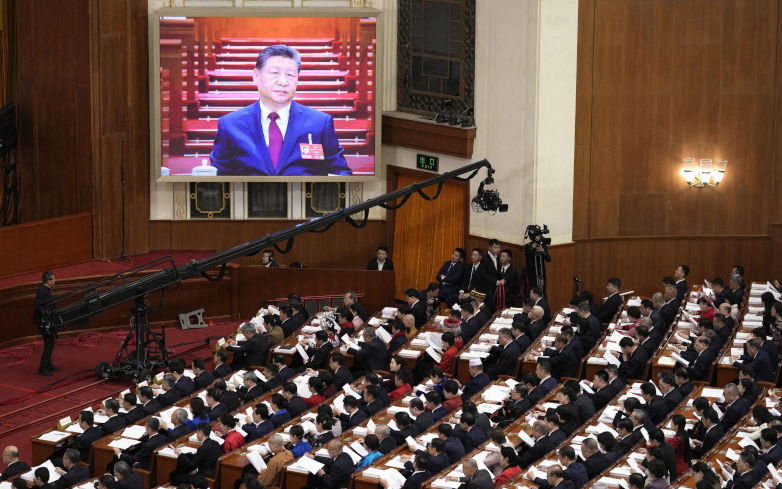
The 15th Five-Year Plan approved by the National People’s Congress on 12 March embeds President Xi Jinping’s vision for the nation’s future development based on the securitisation of the economy, with high-tech development anchored in indigenous innovation guaranteeing the nation’s independence from foreign pressures. Xi clearly sees clearly that dominating the technologies of the future would bring both significant economic rewards and enhanced geopolitical influence. Yet in pursuing this goal, the plan prioritises state-led investment in frontier technologies while subordinating broader structural reform.
For over two decades, China’s leaders have emphasised the need to shift away from a model of development based on overwhelming state investment, exports and debt. That this has not happened highlights the difficulty of reforming the Chinese political economy.
Xi’s plan replicates the old model but with a sharper focus on frontier science and technology. According to the plan, investment in these sectors will be increased by around 10 per cent, with the priority being to strengthen national power with a shift to ‘high-quality development’ focused on the ‘real economy’.
Earlier emphasis on growth targets and reform gives way to a desire for self-sufficiency and security. But this continues China’s state-dependent model of development, with massive resources for investment in favoured sectors such as biotechnology, robotics, quantum computing, green energy and artificial intelligence (AI).
From Xi’s perspective this strategy, while expensive, appears to be delivering results. Value-added production in China’s high-tech sectors is growing faster than overall manufacturing, with official statistics suggesting that the ‘ new economy’ comprises as much as 35 per cent of GDP growth.
The government’s industrial policy is also being used to encourage more private sector participation in priority sectors. Breakthroughs by AI company DeepSeek seem to have influenced the leadership’s thinking on this issue.
Yet the model remains reliant on the state as the nation’s main economic actor. This will not help rectify several familiar problems, including the misallocation of resources to less productive sectors, the potential duplication of projects and wasteful investments by local government guidance funds. It remains to be seen whether attempts to better direct local investment will bear fruit.
The government’s mobilisation of resources also places a major burden on government finances, limiting its capacity to address other priorities. Along with failing to rectify the misallocation of resources, the new plan does little to resolve inequality or accelerate the shift to consumption as a major driver of long-term sustainable growth.
The plan’s focus on high-tech industry, automation and robotics does nothing to help the more than one billion citizens who will be unable to participate in this economy. A substantial share of the urban workforce remains in insecure employment, including gig workers and migrant workers, who may not have full access to city public services.
In the run-up to the 2026 ‘Two Sessions’, several analysts pushed for consumption to play a greater role in the economy. The leadership has taken on this rhetoric, but details are scant. There are references to accelerating urbanisation, strengthening the social safety net and liberalising the service sector. The National Development and Reform Commission’s report was more direct, stating that consumption growth lacks momentum.
This shift is politically difficult as it would require redistributing income to households, which would leave fewer resources to invest in Xi’s strategic priorities. Such financial restructuring is not on the plan’s agenda.
As a result, the plan only includes incremental language about trying to rebalance to support consumption. But the clear priority is still supply-side actions rather than demand-side measures, with an emphasis on industrial upgrading, AI and technological breakthroughs. The creation of a consumer-driven economy remains a long-term, secondary objective. The focus is on investment in innovation to promote domestic science and technology, protecting China from possible external pressures.
The plan’s global consequences will be significant. China will retain a very large trade surplus in goods, which will exacerbate frictions with other nations – both developed and developing. Though bottom-end manufacturing has been moving out of China, this does not mean that it has been abandoned by the leadership. Some has shifted inland, while places such as Vietnam are awash with Chinese companies producing low-cost goods for export. Retaining capabilities at all levels of manufacturing will undermine developing countries looking to make low-end manufacturing a basis of their development.
The plan makes it clear that China’s focus is not only to dominate the technologies of the future but to set the standards that govern them. Other nations will be obliged to follow and adopt these standards. To support this, Premier Li Qiang’s 2026 Government Work Report stressed the need to strengthen not only trade in goods but especially trade in services. This includes finance, technology, consumer support and logistics, particularly in advanced sectors such as biotechnology, robotics, green energy and AI.
The result is an economy in which China exports not just goods, but integrated packages based on China’s pursuit of innovation in an attempt to shut out Western technologies. This is China’s play to translate industrial policy into a boost in economic gains, while greatly reinforcing its geopolitical influence throughout the globe.
Republished from East Asia Forum, 12 April 2026