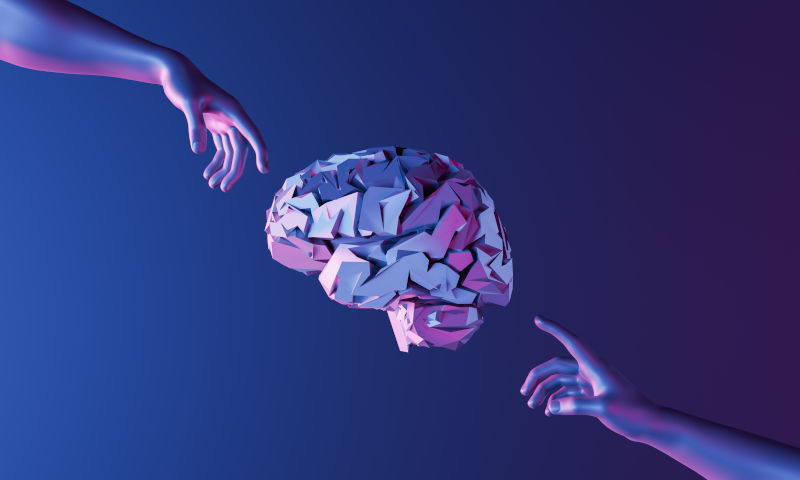
When machines make the art, what’s left for human creativity?
December 7, 2025
As AI and automation take over more of the labour once central to artistic practice, creativity is shifting from making to selecting. The question is whether human expression survives that shift – or slowly withers.
As digital technologies have reshaped the way we work, communicate, and create, the meaning of human creativity itself has begun to shift. Photography offers a striking illustration of this change. Not long ago, it was a craft that required patience, skill, and material investment. I remember travelling through Europe with dozens of rolls of Kodak film, each one reminding me that every shot counted. Creativity then was grounded in technical understanding, deliberate choices, and the constraints of the medium.
The journey did not end with the click. Processing and printing were an entire craft of their own, and an expensive one. I used to develop black-and-white photographs myself, and there was something almost meditative in watching an image slowly appear under the red glow of the darkroom. Creativity was distributed across many stages: composing the shot, adjusting the camera settings, choosing the film, developing it by hand, and coaxing out the final print.
Today, the landscape could not be more different. On any given trip, I take thousands of photographs with fully automated cameras or simply my iPhone. I do not count my shots anymore. Why would I? The cost is virtually zero, the process instant, and the results – thanks to computational photography – often astonishingly good. If I wish, I can still manipulate exposure or focus, but this increasingly feels like a nostalgic gesture. Automation has become so powerful that manual adjustments are rarely necessary.
So, what then remains of creativity? If technology performs much of the labour that once defined a craft, does the artist become merely a selector? Perhaps composition – the ability to frame a moment, choose the right light, and sense the precise instant when a scene reveals itself – is now the heart of photographic creativity. The camera can handle mechanics, but it cannot feel wonder. Not yet at least.
This question extends far beyond photography. With the rise of artificial intelligence, the debate becomes more urgent. If AI can write our essays, compose our poems, summarise our research, or even draft the speeches we once agonised over, where does human creativity reside? What is left for us to contribute? Are we reduced to supplying the idea behind the work – the initial spark – while the machine executes the rest?
One could argue that creativity has always been about the idea. The painter envisions a landscape before brush touches canvas; the novelist senses the arc of a story before a single sentence is written. But the doing – the struggle, the refinement, the search for the right word or gesture – has traditionally shaped the creation itself. The process was inseparable from the outcome.
AI complicates this relationship. The machine can produce variations at lightning speed. It can generate drafts, harmonies, sketches, and options we might never have imagined. In this abundance, the human task shifts from making to curating, from crafting to choosing. The bottleneck has moved – from scarcity of tools to scarcity of vision.
Yet something essential is at stake. A poem is not merely an idea; it is the music of language, the tension between image and silence, the slow chiselling of line and metaphor. A novel is not simply a plot, but the unfolding cadence of sentences shaped by a particular consciousness. These elements – voice, rhythm, imagery, the emotional labour of revision – form the very interior of creativity. If AI assumes responsibility for these layers, then a substantial portion of human creativity is not merely assisted; it is displaced.
What remains uniquely ours is not only the capacity to feel and intend, but the capacity to express those feelings through form – a capacity now shared, at least in execution, with machines. Ideas alone cannot sustain the richness of creative life. A world in which humans provide only the concept while AI supplies the language, the imagery, and the craft risks shrinking our creative muscles, the way automation in photography has pared down technical skill.
Perhaps, then, the challenge is not simply to guide the machine but to insist on participating in the making: to reclaim aspects of the creative struggle that nurture sensitivity, nuance, and imagination. If we surrender too much of the process, we risk impoverishing the very faculties that allow us to dream in the first place.
Technology will continue to change the means, but creativity has always been more than a conversation between soul and world; it has also been the labour of giving that conversation shape. The question now is not whether we can lead this dialogue, but whether we will still recognise our own voice within it.