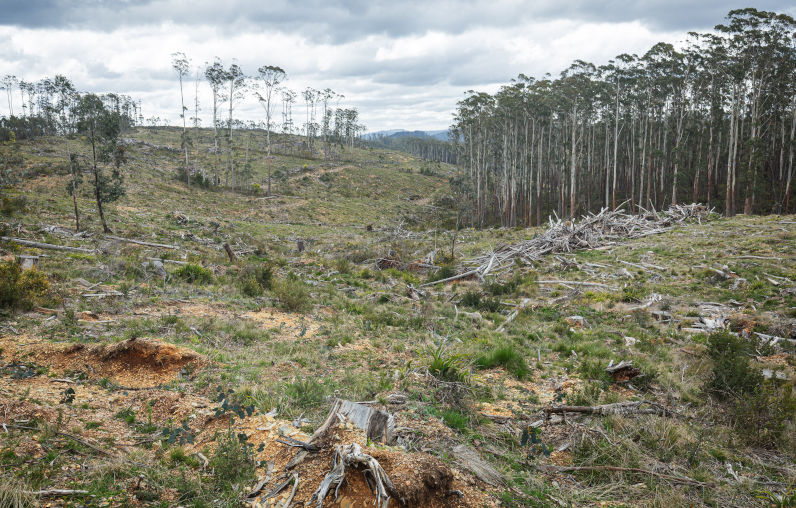
Large-scale forest thinning has limited benefits but major financial and ecological costs
March 2, 2026
Mechanical thinning is increasingly promoted as a fire control solution. But new research finds its effectiveness is mixed and the ecological, climate and financial costs often outweigh the benefits.
There is a long history of the mechanical thinning of forests in standard forestry operations but is thinning effective for fire control and what are the associated costs and benefits?
Thinning typically involves removing some 30-50 per cent of the standing volume of trees via tracked or wheeled machinery. More recently thinning has been proposed to limit wildfire.
Our new study published in the journal _Biological Conservation_ has explored the ecological costs in relation to benefits associated with large-scale mechanical thinning. The study showed that, in many situations, evidence for the effectiveness of thinning is mixed. In fact, there can be significant environmental costs of mechanical thinning that often exceed its benefits, the magnitude of which vary with intensity and extent of thinning operations, as well as how frequently it is conducted.
In some ecosystems around the world, mechanical thinning can be effective at reducing fire risks by removing small trees (termed ’thinning-from-below’) and when combined with prescribed burning. In other situations, the effectiveness of mechanical thinning is muted by extreme fire weather and when thinning operations remove the overstory canopy (’thinning-from-above’), which dries out soils and over-ventilates forests contributing to an increased rate of fire spread and/or elevated fire severity.
Indeed, empirical studies here in Australia shows that thinning either has no effect on wildfire severity, or in some cases make forests more prone to higher severity fire – the exact opposite of what it is intended to do. In North America, effectiveness is tied to fire weather – the more extreme the less effective and the higher the costs as managers seek to apply it even more. Perhaps we should not be surprised by these findings. Forestry manuals from Tasmania and Victoria have long highlighted the elevated fire risks caused by thinning, especially because of the large amounts of debris it leaves behind (adding to fire fuels).
Mechanical thinning can also generate substantial Greenhouse Gas emissions, especially as much of the wood it generates will likely be burnt as firewood. Previous studies in this country indicate that burning one tonne of wood generates about one tonne of greenhouse gas emissions.
Importantly, the extent of emissions for mechanical thinning operations would typically far exceed those otherwise caused by natural disturbances like wildfire. Greenhouse gas emissions, in turn, contribute to climate change which is a key driver of wildfires. Thinning may therefore indirectly exacerbate the very same fire issues that it was proposed to mitigate in the first place, perpetuating the cycle.
Another trade-off associated with thinning is its effects on water yields from forested water catchments. Whilst thinning can contribute to a short-term increase in water yields, vegetation grows back, and as such, this benefit rapidly dissipates. In the medium to long term, mechanical thinning can undermine water security by reducing water yields. This can create additional strains on water supply systems that are often already under pressure.
The fire, climate, and water yield impacts linked to mechanical thinning do not come cheap. Thinning is very expensive for the taxpayer. Part of the cost is associated with the need to construct and maintain extensive road networks to transport the machines used to thin forests. Roads and heavy thinning machines create long-term soil compaction that impedes tree growth, and in some cases leads to complete forest regeneration failure. Roads also facilitate invasions of weeds and feral animals. They also provide greater access for human-caused wildfire ignitions – arson. Notably, many wildfires not only in Australia but also in North America and Europe are deliberately or accidentally set by humans.
This study on trade-offs highlights how the high ecological and financial costs of large-scale thinning operations will typically exceed benefits. The work concluded that large areas of natural forest need to be properly protected and exempt from thinning operations as the costs and impacts are considerable and thinning is not worth the trade-offs. These protected areas should include older forests, roadless areas, and forests of high conservation value (e.g. natural areas, critical wildlife habitat).