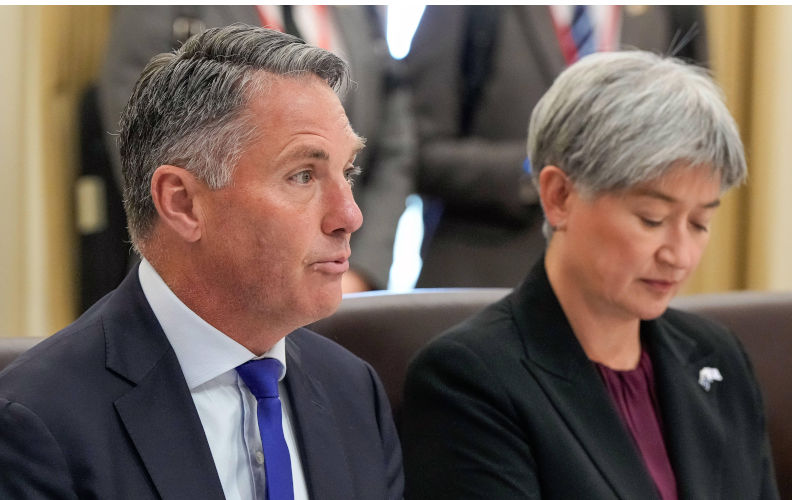
Both opposition parties have superannuation in their sights
Saul Eslake

Both opposition parties have superannuation in their sights

The Coalition and One Nation are again targeting Australia’s superannuation system, despite evidence it has reduced pension reliance and warnings that early withdrawals could fuel inflation and weaken retirement savings.

Catriona Jackson

P&I is growing. Help us keep up the fight – Message from the Editor

Another 250,000 readers found P&I over the past year. As our August fundraising campaign begins, we’re asking readers to help keep independent journalism free, fearless and growing.

Help keep
P&I independent

No corporate owner.
No paywall.
No advertising.
Powered by readers.

Become a regular supporter

PEARLS AND IRRITATIONS

John Menadue’s Public Policy Journal


A case for free and fair elections
David Solomon

A case for free and fair elections

The High Court has recognised an implied freedom of political communication. The same constitutional principles could support a broader guarantee that Australian elections themselves must be free and fair.

Trump is hastening the decline of American power
Joseph E. Stiglitz

Trump is hastening the decline of American power

Trump’s threats against countries trading with Iran expose the limits of US economic power, as allies resist Washington’s demands and the global economy moves towards a less American-dominated order.

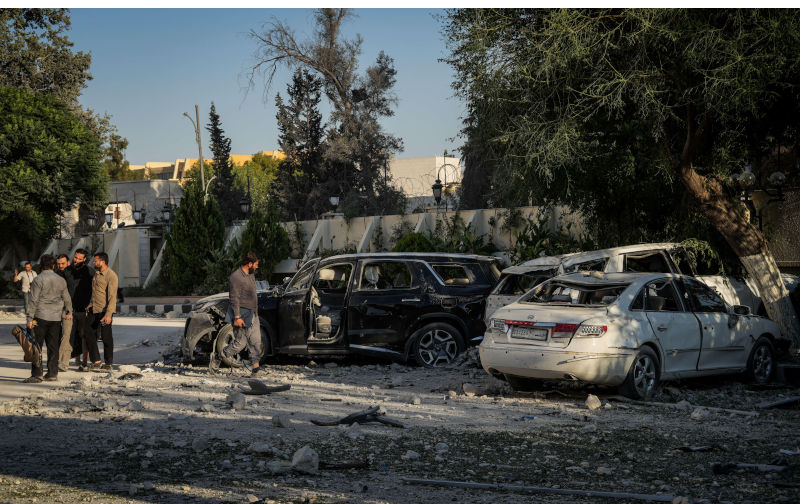
Netanyahu’s political future is now tied to the genocide in Gaza
Refaat Ibrahim

Netanyahu’s political future is now tied to the genocide in Gaza

Israeli voters are choosing between competing approaches to war and security, while Palestinians in Gaza and the West Bank continue to bear the consequences.

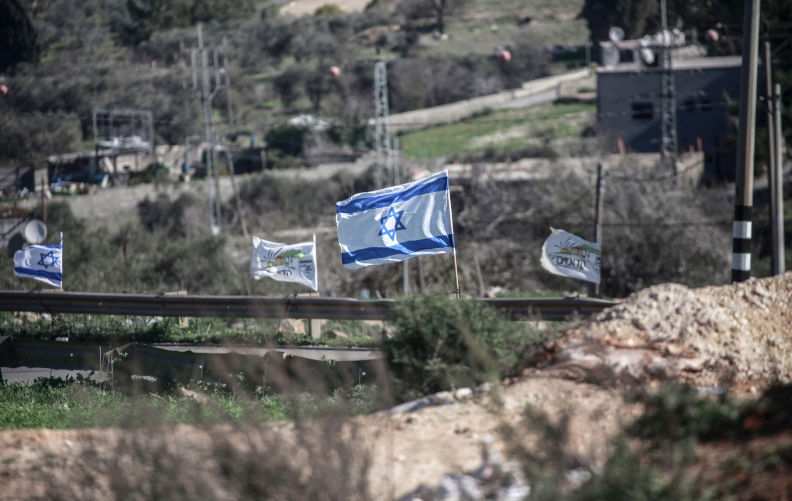
A visit to the West Bank: social and religious apartheid – part two
Jeremy Webb

A visit to the West Bank: social and religious apartheid – part two

In part two of a four-part series, daily life in the West Bank reveals how checkpoints, travel restrictions and controls over religious and cultural life shape Palestinians’ experience of Israeli occupation.


Help us reach $250,000 in new annual support

P&I is powered by you, our readers. No corporate owner. No paywall. No advertising.

AUD 0 of AUD 250,000 0% of our goal

Become a regular supporter

Campaign ends 30 September 2026.


Can technology turn China’s demographic decline into an advantage?
Alex Lo

Can technology turn China’s demographic decline into an advantage?

China’s shrinking and ageing population is widely seen as an economic threat, but new research suggests labour scarcity can accelerate automation, boost productivity and sustain growth despite a smaller workforce.

What 9/11 taught us about coexistence
Sirwan Barzanji

What 9/11 taught us about coexistence

Twenty-five years after 9/11, divisions over Islam, identity and conflict remain powerful, raising an enduring question about how diverse societies can live together without turning cultural difference into fear and hatred.

Work longer, wait longer, now borrow your own retirement back
Kos Samaras

Work longer, wait longer, now borrow your own retirement back

One Nation’s super-for-housing plan offers immediate relief, but risks repeating a message its new midlife voters know well: solve the problem with your own money.

When menopause becomes a digital marketplace
Danielle Keats Citron, Jeanine K. Morris-Rush, Mona Sloane

When menopause becomes a digital marketplace

Women seeking answers about menopause are entering a digital health landscape where intimate data, algorithmic predictions and aggressive marketing increasingly influence medical decisions, raising serious questions about privacy, autonomy and care.

The writers and readers who remind us why P&I matters – Message from the Editor
Catriona Jackson

The writers and readers who remind us why P&I matters – Message from the Editor

From superannuation and Gaza to the gig economy – this week’s writers and readers show why independent journalism matters, and why P&I will remain free to read.

A visit to the West Bank: economic apartheid – part one
Jeremy Webb

A visit to the West Bank: economic apartheid – part one

Israel’s tightening restrictions are deepening the West Bank’s economic crisis. In part one of a four-part series, Jeremy Webb's first-hand account examines unemployment, movement controls and mounting Palestinian economic hardship.

Turning Crown evidence – a different twist
Andrew Fraser

Turning Crown evidence – a different twist

Documents obtained under freedom of information raise questions about how senior NSW prosecutors came to publicly support DPP Sally Dowling, after being given just 40 minutes to express contrary views.

No Kings plans nationwide push to get Americans voting early
Jessica Corbett

No Kings plans nationwide push to get Americans voting early

The No Kings coalition is planning a fourth nationwide day of action, this time focused on mobilising early voting ahead of the US midterm elections.

Civilisation will end not with a bang, but with Attachment B
Jeffrey Braithwaite

Civilisation will end not with a bang, but with Attachment B

From hospitals and universities to IT systems, the machinery of compliance meant to reduce risk is increasingly swallowing the work it was designed to support.

Why India should keep diversifying its trade
Shekhar Aiyar

Why India should keep diversifying its trade

As the global trading system fractures, India can protect its economic and strategic autonomy by expanding trade partnerships, diversifying export markets and resisting deals that constrain relations with other countries.

Lower house prices should be welcomed
Michael Keating

Lower house prices should be welcomed

Restoring home ownership requires substantially lower house prices – and for most existing homeowners, falling property values need not leave them materially worse off.

‘Bombshell’ report says Netanyahu was warned before 7 October – and Israel rejected an offer to free civilian captives
Julia Conley

‘Bombshell’ report says Netanyahu was warned before 7 October – and Israel rejected an offer to free civilian captives

An Haaretz investigation says Netanyahu failed to pass on a warning of a major Hamas operation, while Israeli officials later rejected an unconditional offer to release civilian captives.

UK bans goods from illegal Israeli settlements in major policy shift
Shola Lawal

UK bans goods from illegal Israeli settlements in major policy shift

Britain has banned imports from illegal Israeli settlements in the occupied West Bank and announced further sanctions as pressure grows over settlement expansion and violence against Palestinians.

Australia faces international criticism for lack of transparency in military trade 
Jessica Morrison

Australia faces international criticism for lack of transparency in military trade 

Australia’s military exports are growing, but parliament and the public still lack clear information about what is being exported, where it goes and how it is used.

Australia is under strain – and politics is part of the problem
Ross Gittins

Australia is under strain – and politics is part of the problem

Financial stress is rising and life satisfaction is falling, but Australians’ discontent runs deeper than household budgets to growing distrust in politics and government.

Australia’s social media ban has an enforcement problem
Daniel Angus, Christine Parker

Australia’s social media ban has an enforcement problem

New powers will help eSafety investigate whether platforms are enforcing the under-16 social media restrictions, but early evidence suggests the policy’s limits run deeper.

John Menadue's book on Israel's war against Gaza

Israel's war against Gaza

Media coverage of the war in Gaza since October 2023 has spread a series of lies propagated by Israel and the United States. This publication presents information, analysis, clarification, views and perspectives largely unavailable in mainstream media in Australia and elsewhere.

Download the PDF

Latest letters to the editor

Climate as the change agent

Les Macdonald — Balmain NSW 2041

Another great analysis by Kos, but in focusing on the generations and their influence on political outcomes it misses the fundamental approaching world crisis and the impact that will have on all the generations as it invades the self-satisfied nature of the current political space. We know that actions being taken around the world, with some serious and exemplary exceptions are by far insufficient to adequately deal with the approaching Armageddon of climate change. As droughts, bushfires, water inadequacies, crop failures and unsustainable and unlivable temperatures emerge, as they certainly will, it is likely that the preferences of many generations...
Another reason why the Greens vote has not risen

John Leonard — Canberra

Kos Samaras provides some arguments for the Greens' lack of vote share but misses one very important point: from the 1980s onwards the unremitting hostility of the mainstream media has been turned on the Greens. This bias against the Greens has been far more rigorous and effective than its bias against Labor. The Greens are painted as both dangerous radicals and hypocritical, incompetent clowns, so many people have never even considered voting for them. I suspect the vigour of this campaign is because the media's paymasters recognise Green policies as the greatest danger to the status quo.
The Greens

Gary Barnes — Mosman NSW

The article looks at the future for the Greens and Labor but doesn't consider what is happening on the other side of politics. The combination of Pauline Hanson, the Murdochs, and the social media algorithms making Australians angrier is a real and present threat to our democracy. In that regard the missing middle represented by the independents and the new Community Strong Australia party if it successfully launches could be much more important and a real and more sensible alternative to the old duopoly by the next election.
Taking responsibility for our emissions

Jenny Goldie — Cooma NSW

Bob Brown has given us an excellent concept: that if Australia produces five per cent of global emissions, then we are responsible for five per cent of the damages caused. So, we should be giving Nepal $350 million, not $8m, towards their $7 billion in damages. We should be responsible for 4,650 of the 93,000 people affected by the disaster including 300 of the dead or missing. We should be responsible for 1500 of the 30,000 heat-related deaths in Europe this year. And if there are to be two billion climate-related deaths by the end of the century, then we...
A rising Global South is unstoppable

Les Macdonald — Balmain NSW 2041

John has written an excellent summary of the impact of the Shanghai Cooperation Organization. More than that he has written something that should, but won't, focus the minds of the policy elites of the West on their gradual decline into irrelevance to a future world. I have remained frustrated for decades that the bulk of humanity remained under the Western boot simply because they did not realise their collective strength. Meantime the West, first under the UK then under the US, continued to impose their egocentric, self absorbed and vainglorious will upon 88% of humanity. The SCO, BRICS and other...
We can stand in the way or lead the charge

Les Macdonald — Balmain NSW 2041

Giles writes with insight and enthusiasm on the growing lead of electric vehicles over the ICE type. This is a repeat of the century ago move from Horses and carts to internal combustion engines vehicles. All of us can be in the lead in making this change or we can resist the future by hankering for the past. Let's do the former!!
What will become of Australia?

Margaret Callinan — Hawthorn VIC 3122

There's another way to look at The Greens' static numbers. Lack of money to extend their advertising reach, lack of personnel because of party structure unlike community independents, and so many poorly educated people. The major flaw in Amy Remeikis' otherwise excellent book Where it all went wrong is that it shows how Howard demolished secondary and tertiary education via funding decisions but does not examine the consequences that continue to this day. So the loudest, best funded political voices get heard by a lot of people who, through no fault of their own, have never learned to critique what...
Climate change should be depoliticised

Ken Russell — Redcliffe, Qld

Bob Brown's article comprehensively explains the disastrous Australian and global failure to address the climate emergency. However, there is a problem related to the final sentence in the article: The 2028 election will be the next test of the nation's conscience. Climate change has never been an issue that many people base their vote on. A recent survey related to the Victorian state election, funded by the University of Melbourne, found that only 12% of respondents included climate change in their top three issues. There is no reason to think these numbers will change significantly at the next federal election....